
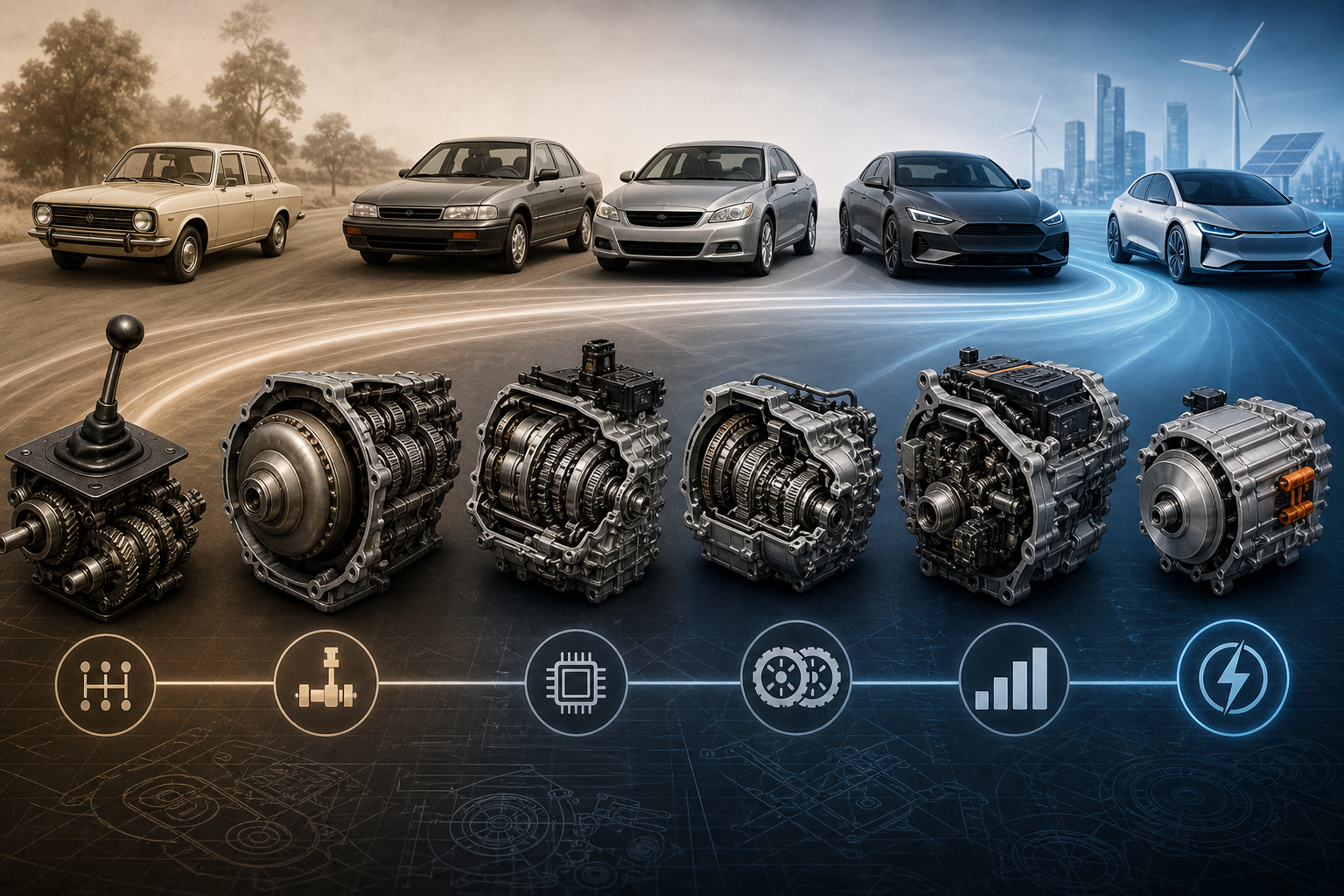
The Early Days of Simpler Systems
Fifty years ago, most cars used manual gearboxes. These systems were simple and durable. Drivers had full control over gear selection. They were reliable but required more effort to operate.
Automatic gearboxes were available, but they were less common. Early versions were not as efficient and often had fewer gears. This affected both performance and fuel economy.
The Rise of Automatic Transmissions
As technology improved, automatic gearboxes became more refined. Better hydraulic systems made gear changes smoother. Reliability also improved, which increased their popularity.
Drivers began to favour comfort and ease of use. Automatics became more common across a wider range of vehicles.
The Impact of Electronics
The introduction of electronic control systems changed everything. Gearboxes were no longer purely mechanical. Sensors and control units began to manage gear changes with precision.
This allowed for better fuel efficiency and smoother driving. It also reduced the chance of driver error affecting performance.
New Gearbox Types Emerge
In the 1990s and early 2000s, new transmission designs entered the market. Continuously variable transmissions offered seamless gear changes without fixed ratios. Dual clutch systems delivered fast and precise shifts, especially in performance cars.
These innovations gave drivers more choice and improved driving experiences across different vehicle types.
More Gears and Greater Efficiency
Modern gearboxes often have many more gears than older systems. Some vehicles now feature up to ten speeds. These extra gears help keep the engine operating efficiently at all times.
This development has been driven by the need to reduce fuel consumption and emissions. Manufacturers continue to refine gearbox design to meet stricter standards.
The Shift Towards Electric Vehicles
Electric vehicles are changing how gearboxes are used. Many electric cars do not need traditional multi-speed transmissions. They often use a single-speed system because electric motors deliver power differently.
This marks a significant shift in gearbox design. It also introduces new challenges for repair and maintenance specialists.
Modern Challenges and Expertise
Today’s gearboxes are highly advanced. They combine mechanical, hydraulic, and electronic systems. This makes them more efficient but also more complex to diagnose and repair.
Gearbox technology will continue to evolve. Electrification and software development will shape the future. Despite these changes, the purpose remains the same. The gearbox ensures power is delivered smoothly and efficiently.
At Service4Service, we work across all generations of gearboxes. From older manual systems to modern electronically controlled units, each requires a different approach. If you want to explore gearbox repairs in more detail, visit our website.
 Malachy
  Ellis
Ellis