
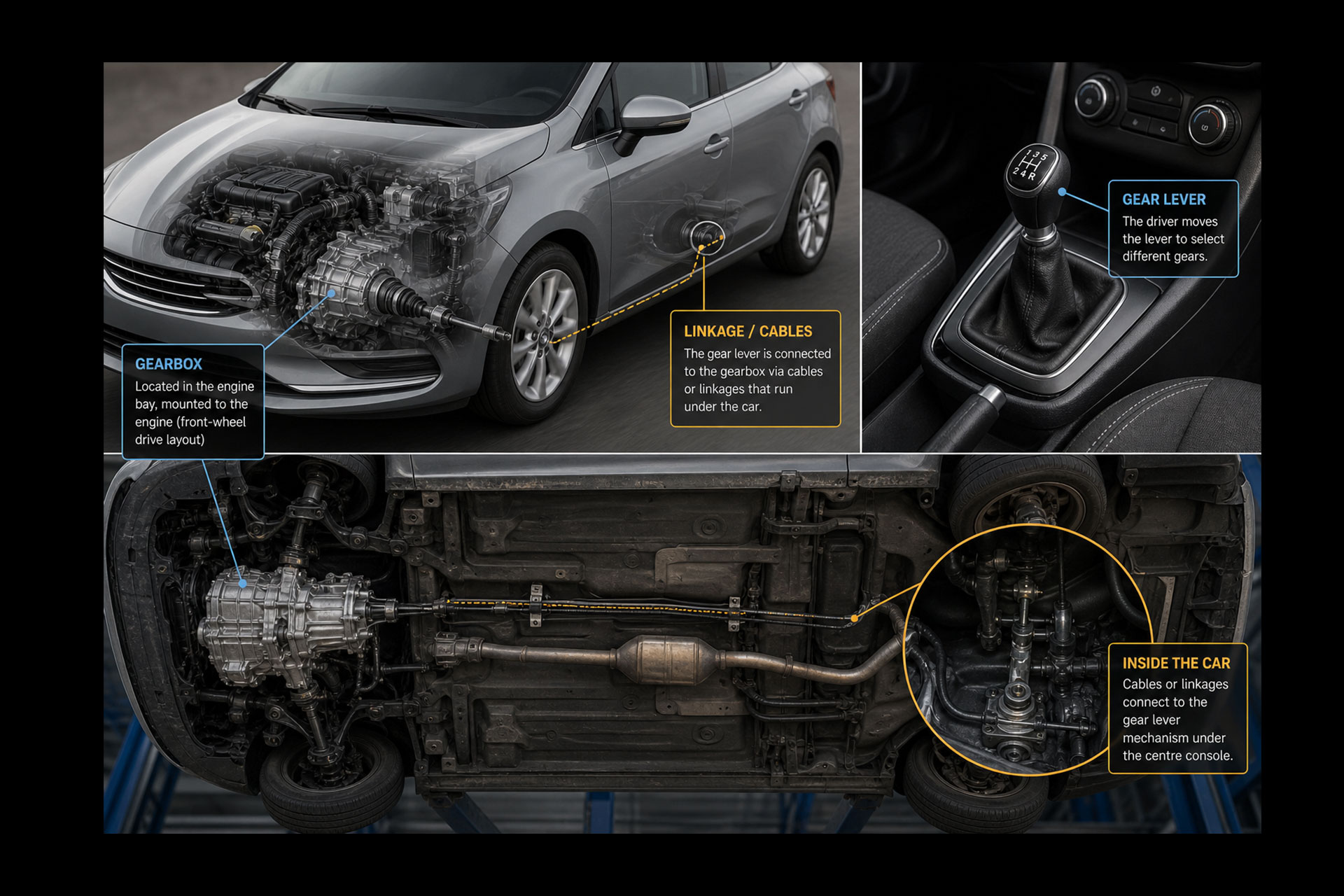
What the Gearbox Is Designed to Do
At Service4Service, we often speak to drivers who are unsure what their gearbox actually does. Most people know it is involved in changing gears, but its role goes much deeper. The gearbox controls how power from the engine is delivered to the wheels. Without it, your car would struggle to move efficiently or smoothly.
Engines operate best within a certain speed range. The gearbox allows the engine to stay within this range while the car travels at different speeds. It adjusts the balance between power and speed so the car can pull away, climb hills, and cruise comfortably.
Why Different Gears Matter
Inside the gearbox are multiple sets of gears. Each one has a different size and purpose. Lower gears provide more pulling power. Higher gears allow the car to travel faster with less strain on the engine.
When you change gear, you are selecting a different ratio. This ratio determines how hard the engine works and how quickly the wheels turn. This is why your car needs lower gears when starting off and higher gears when driving at speed.
How Manual Gearboxes Work
In a manual vehicle, the driver controls gear changes. Pressing the clutch disconnects the engine from the gearbox. This allows a new gear to be selected using the gear lever. Once the clutch is released, power flows back through the system.
This process gives the driver full control, but it also means more responsibility. Poor timing or incorrect gear selection can increase wear over time.
How Automatic Gearboxes Work
Automatic gearboxes handle gear changes for you. They rely on a combination of hydraulic systems, sensors, and control units. These systems decide when to shift gears based on speed, throttle input, and driving conditions.
Many automatics use a torque converter instead of a clutch. This allows the car to remain in gear while stationary and provides smoother transitions between gears.
The Role of Gearbox Fluid
Gearbox fluid is essential to the system. It lubricates internal components and helps manage heat. In automatic gearboxes, it also plays a role in transferring power.
Over time, this fluid can degrade. When that happens, performance can suffer. Regular checks and servicing help prevent long-term damage.
Signs Something Is Not Right
Gearboxes are built to last, but they can develop faults. Common signs include delayed gear changes, unusual noises, or slipping during acceleration. These issues should not be ignored.
At Service4Service, we carry out structured diagnostics to identify the cause. This includes checking fluid condition, scanning for fault codes, and road testing the vehicle.
Keeping Your Gearbox in Good Condition
Understanding how your gearbox works can help you look after it. Smooth driving habits and regular servicing make a real difference. A well-maintained gearbox will perform better and last longer.If you suspect an issue or want expert advice, you can learn more about our specialist services here: https://www.service4service.co.uk/car-repairs/gearboxes
 Malachy