
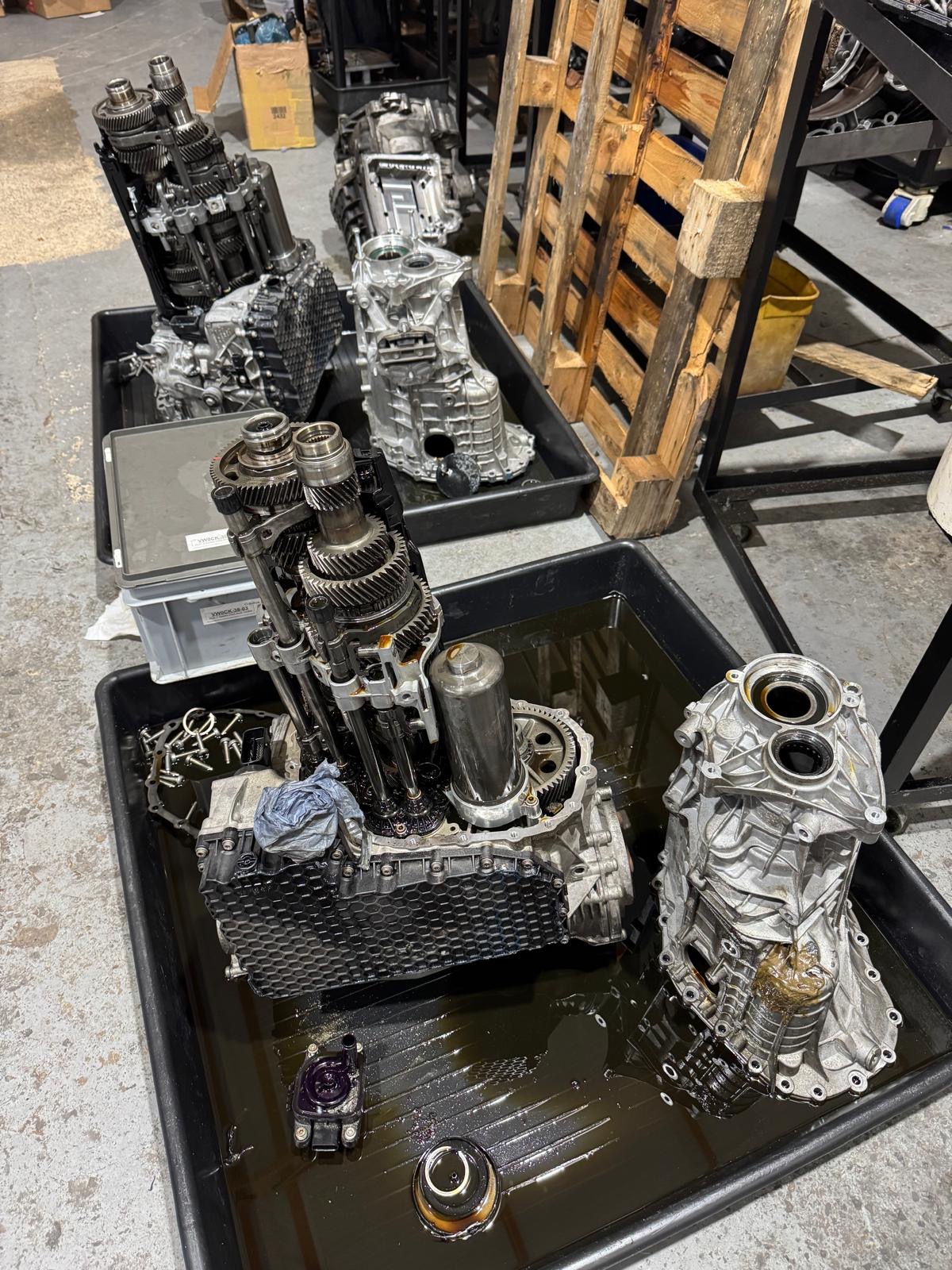
If your automatic is revving but not accelerating, the gearbox is usually slipping, most often due to worn clutches, low fluid or a CVT belt fault.
The engine is doing its job, the road speed is not following, and the gap between the two is slip. This is different from a car that accelerates weakly with normal revs, which points at the engine side, and telling those two apart is the first step to the right diagnosis.
Engine problem or gearbox problem?
Watch the rev counter. If revs surge or flare while the speed lags, especially under hard throttle or on hills, drive is slipping in the transmission. If the revs and speed rise together but the car simply feels flat, the engine is down on power and the gearbox is likely innocent: think turbo, fuel or ignition faults, or a blocked particulate filter on diesels. If the engine roars its head off from a standstill with barely any movement at all, and the fluid level is correct, the torque converter or forward clutch has a serious problem and the car should not be pressed further.
On CVT gearboxes, fitted to many Nissan, Honda, Toyota and Subaru models, revving without matching acceleration has a specific flavour: the revs hang at a constant high level while speed builds slowly. Some of that is normal CVT character, but a worsening disconnect between revs and speed on a CVT points to belt or pulley wear and deserves prompt attention, since CVT faults escalate quickly.
The causes in the gearbox
Clutch slip is one of the most common causes and behaves exactly as described in our full guide to gearbox slipping: worn friction material, degraded fluid or weak hydraulic pressure letting the plates slip under torque. Low fluid amplifies all of it, which is why the level and condition are checked before anything else.
The torque converter contributes in two ways. Its internal lock up clutch can slip, felt as flaring revs at cruising speed. More rarely, the converter’s stator clutch fails, which robs the car of its pull away multiplication: the engine revs, the car creeps, and everything feels strangled at low speed while motorway cruising seems almost normal. It is a distinctive pattern that a road test identifies quickly.
On dual clutch gearboxes, flaring revs between gears mean the clutch handover is slipping, usually worn clutches or a mechatronic pressure fault, and the wear values can be read electronically to confirm it.
Why continuing to drive is expensive
Every second of slip converts engine power into heat inside the gearbox instead of motion. The friction material wears, the fluid burns, and the debris circulates through the valve body. A car that flares slightly on hard acceleration today will usually get worse over time within months if the cause is progressive, and the repair grows in step. Slip is also the fault most likely to strand you suddenly, because a clutch that slips is a clutch on its way to not driving at all. The sensible move is to drive gently and get it diagnosed within days, not weeks.
What a diagnosis involves
Fluid level and condition, fault codes, and a road test with live data streaming from the gearbox, which shows the exact ratio being achieved against the ratio commanded. Slip appears in the data long before it is obvious from the seat. From there the cause is narrowed to fluid, hydraulic pressure, a specific clutch pack, the converter or, on a CVT, the belt and pulleys, and you get a repair decision based on measurement rather than guesswork.
Frequently asked questions
Why does my car rev high but go slow?
Drive is slipping between the engine and the wheels. In an automatic that means a slipping clutch pack, a torque converter fault, low or degraded fluid, or belt wear on a CVT.
How do I know if it is the engine or the gearbox?
If revs rise faster than speed under load, it is transmission slip. If revs and speed rise together but the car feels weak, it is an engine side power problem.
Is it safe to drive a car that revs without accelerating?
Only gently and for a short distance, if the slip is mild and occasional. If the engine roars from a standstill with little or no movement, or the slip is getting worse, stop driving and have the car recovered. Continuing to drive generates heat that can quickly turn a clutch or fluid repair into a full gearbox rebuild.
Why does my CVT rev high without going faster?
CVTs naturally hold revs while speed builds, but a worsening gap between revs and acceleration points to belt or pulley wear, which needs prompt attention before it fails outright.
Revs climbing faster than your speed? Have the slip measured before it becomes a breakdown. Call Service4Service on 0808 164 0418 or send an enquiry for honest advice and a fixed price quote with a 12 month guarantee.