
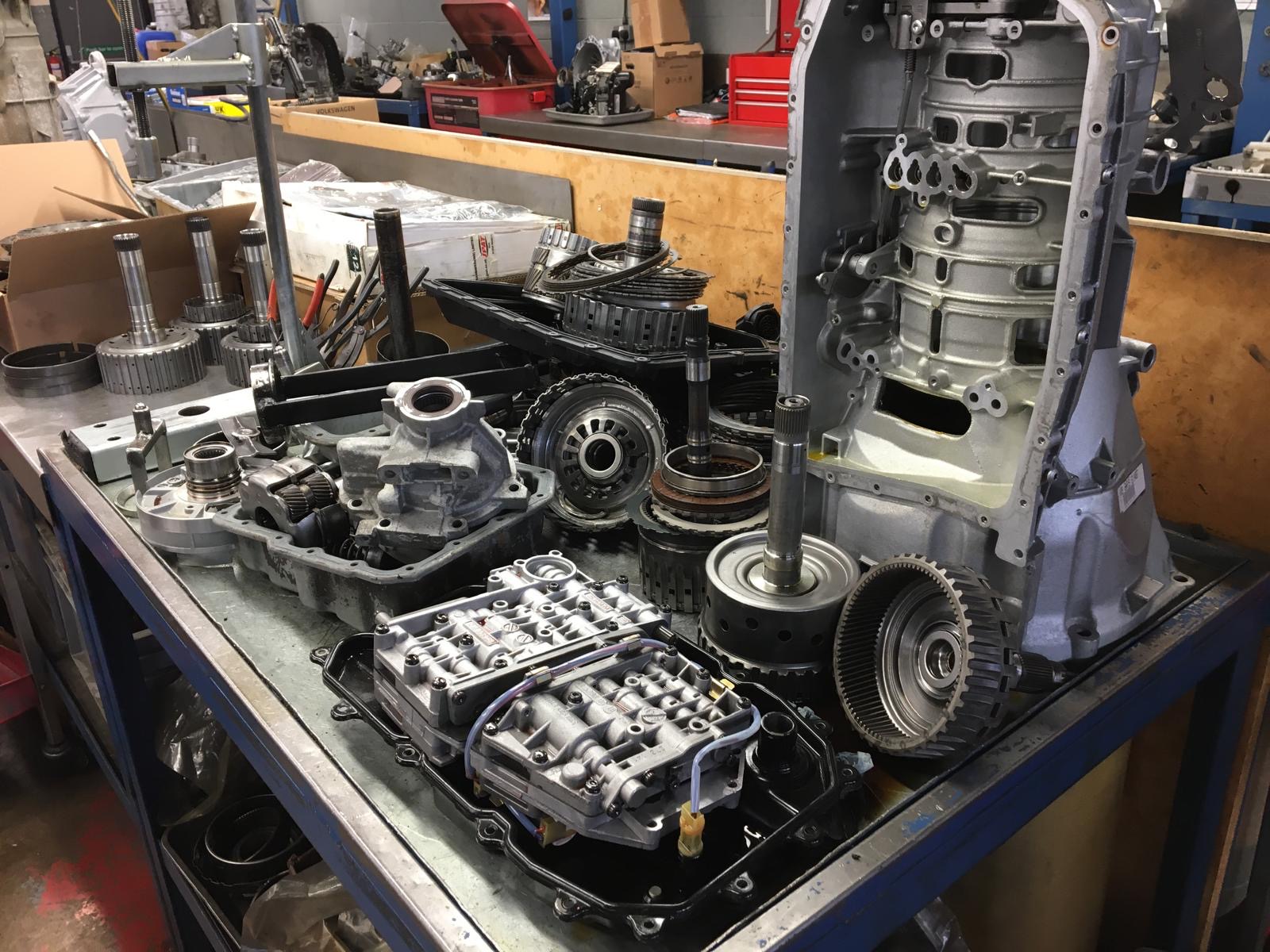
Yes, in many cases a gearbox can be repaired without replacing it. The outcome depends on what has gone wrong, how long the fault has been left, and what type of gearbox the vehicle has. A targeted repair or rebuild is almost always cheaper than a full replacement, which is why getting a proper diagnostic early is so important.
At Service4Service, the majority of gearboxes we see do not need to be completely replaced. The right repair depends on identifying the actual fault first, rather than assuming the worst.
What Is the Difference Between a Repair, a Rebuild and a Replacement?
These three terms get used interchangeably, but they mean different things and carry very different costs.
A repair addresses a specific fault within the gearbox without stripping the whole unit down. This covers things like solenoid replacement, fluid changes, seal repairs, valve body work and sensor faults. It is the least invasive and least expensive route.
A rebuild involves stripping the gearbox down completely, inspecting every internal component and replacing anything that is worn or damaged. The original casing and core components are kept, but the internals are renewed. A rebuild is carried out when the damage is too widespread for a targeted repair but the gearbox itself is worth saving.
A replacement means the existing gearbox is removed and replaced with either a new unit, a reconditioned unit or an exchange unit. This is the most expensive route and is only necessary when the gearbox has suffered damage that cannot be addressed through repair or rebuild.
Which Gearbox Faults Can Be Repaired Without Replacing?
Transmission fluid issues Degraded or low transmission fluid is one of the most common causes of gearbox problems, and one of the most straightforward to address. A fluid change or flush can resolve sluggish shifting, minor slipping and rough gear changes caused purely by fluid condition. Costs typically depending on the vehicle.
Solenoid faults Solenoids control the flow of hydraulic fluid within an automatic gearbox. A faulty solenoid can cause delayed shifts, harsh changes or the gearbox to slip between gears. Replacing a solenoid is a targeted repair that does not require the gearbox to be fully stripped. Costs including parts and labour.
Valve body repair The valve body regulates hydraulic pressure throughout the automatic transmission. Wear or blockages within the valve body can cause a range of shift quality issues. Valve body repair or replacement is more involved than a solenoid swap but still avoids a full rebuild. Costs typically range from after the gearbox has been tested
Seal and gasket replacement Fluid leaks caused by worn seals or gaskets can be addressed without replacing the gearbox. Catching a leak early and replacing the relevant seal is significantly cheaper than allowing the fluid level to drop and cause internal damage. Costs vary depending on which seal is at fault and how accessible it is.
Sensor and electrical faults Modern gearboxes rely heavily on sensors and electronic control units. A faulty speed sensor, temperature sensor or transmission control unit can cause symptoms that look like serious mechanical failure but can be resolved with a component replacement. A diagnostic check is essential to identify electrical faults before any mechanical work is recommended. For more on this, see our post on what fault codes mean for your transmission.
Clutch replacement (manual) On a manual gearbox, clutch wear is a normal part of vehicle life. A clutch replacement addresses slipping, difficulty selecting gears and a biting point that has moved too high. The gearbox itself does not need to be replaced, only the clutch assembly.
When Is a Rebuild Necessary?
A rebuild becomes necessary when the internal components of the gearbox have suffered wear or damage across multiple areas, but the overall casing and core structure are still sound. Common reasons a rebuild is recommended over a targeted repair include:
- Worn clutch packs throughout an automatic gearbox
- Damaged planetary gear sets
- Worn bearings or thrust washers causing noise and roughness
- Contamination of the gearbox internals due to a fluid failure or coolant ingress
A rebuild is often the most cost-effective route when a vehicle has significant value or the owner intends to keep it long term. It returns the gearbox to a near-new condition rather than simply addressing one fault at a time.
When Does a Gearbox Need to Be Replaced?
Replacement becomes the right option when the damage is too severe or too widespread to be addressed through repair or rebuild. This includes:
- Cracked or structurally damaged casings
- Severe overheating that has warped internal components beyond repair
- Damage caused by running the gearbox without fluid for a long extended period
- Cases where the cost of a rebuild exceeds the cost of a quality reconditioned unit
In these situations, a reconditioned or exchange unit is often the most sensible route. A reconditioned gearbox has been stripped, inspected and rebuilt to a known standard, and typically comes with a warranty.
Why Diagnosis Comes First
The single most important step before any gearbox work is a proper diagnostic. Many gearbox symptoms include slipping, warning lights, rough shifts can be caused by sensor faults, fluid issues or solenoid problems that are far cheaper to address than internal mechanical damage.
A specialist who recommends repair work before carrying out a diagnostic is worth approaching with caution. At Service4Service, we carry out a full diagnostic on every vehicle before any full replacements are suggested. This ensures you are only paying for the work that is actually needed.
For guidance on finding the right specialist, see our post on how to find a gearbox specialist near you.
Frequently Asked Questions
Is it always worth repairing a gearbox rather than replacing it? Not always. For vehicles with high mileage or low market value, the cost of a full rebuild may not be justified. A specialist can help you weigh up the options honestly. For newer vehicles or those with strong residual value, repair or rebuild is almost always the better financial decision.
Can an automatic gearbox be repaired? Yes. Automatic gearboxes can be repaired in many cases. Solenoid faults, fluid issues, valve body problems and sensor faults are all repairable without replacing the unit. More serious internal damage may require a rebuild or replacement, but this is not the starting assumption.
Will a gearbox repair last as long as a replacement? A well-executed repair on a specific fault can last as long as the original gearbox. A full rebuild, carried out properly by a specialist, effectively returns the gearbox to near-new condition. The longevity of any repair depends on the quality of the work and whether the vehicle is maintained correctly afterwards.
How do I know if my gearbox needs a repair or a replacement? You will not know without a diagnostic. The symptoms of a repairable fault and those of a more serious failure can look identical from the driver’s seat. A specialist with the right equipment will be able to tell you exactly what is wrong and what the most cost-effective solution is. See our guide on the signs your gearbox is about to fail for what to watch out for before booking a check.
If your gearbox is showing signs of trouble, contact the Service4Service team for honest advice and a fixed-price quote. Call us on 0808 164 0418 or send an enquiry for a same-day response.
 Malachy
  Ellis
Ellis