
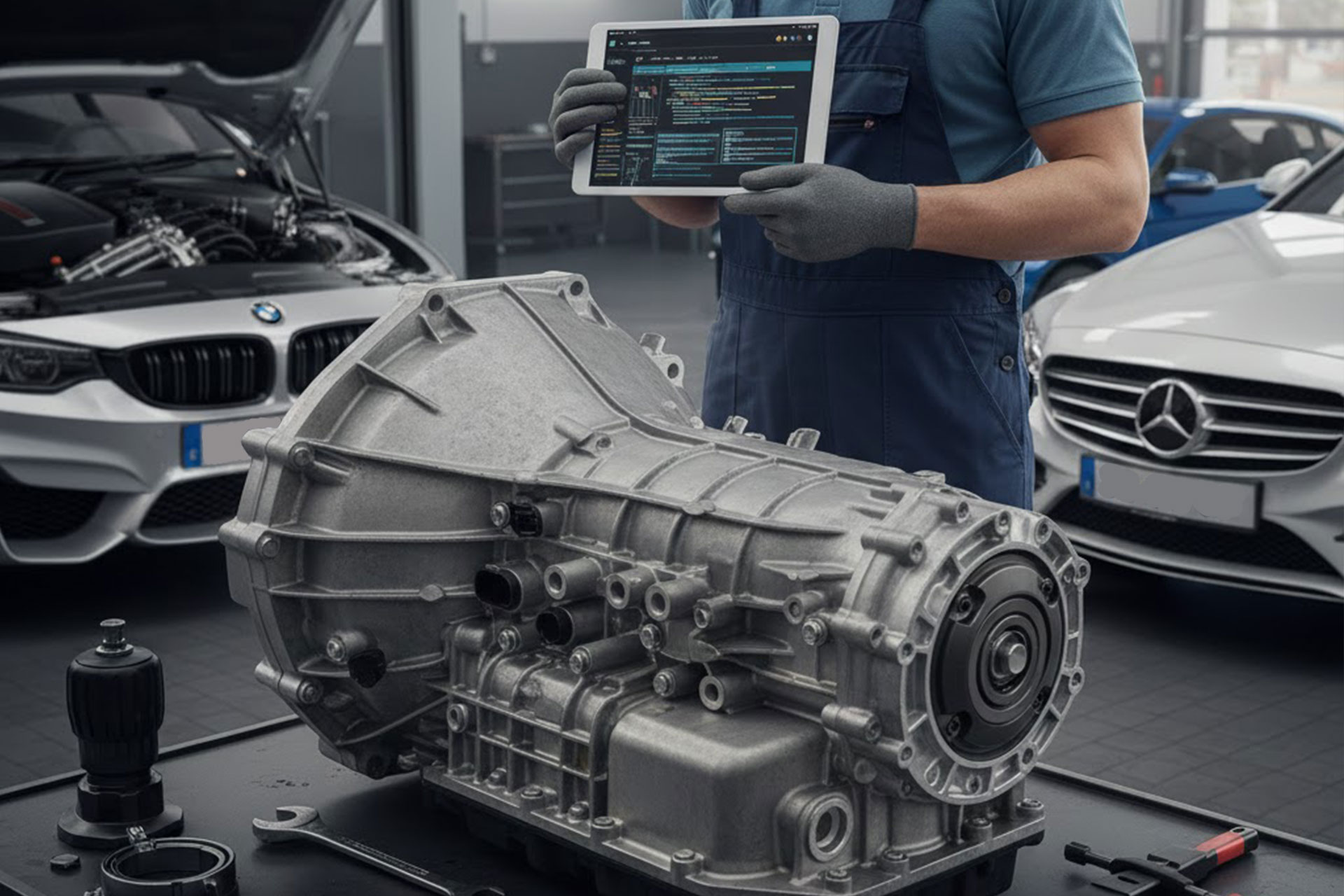
Dual-Clutch Transmissions, commonly known as DCTs, are designed to deliver performance-focused driving with the efficiency of a manual gearbox and the convenience of an automatic. Brands such as BMW, Mercedes-Benz and Hyundai have embraced DCT technology across a wide range of models, from hot hatchbacks to executive saloons. However, while DCTs excel on paper, real-world driving conditions can expose weaknesses when servicing is overlooked or misunderstood.
How DCT Gearboxes Work in Practice
Like DSG systems, DCT gearboxes use two clutches to pre-select gears and deliver rapid shifts. The emphasis, particularly in BMW and Mercedes applications, is often on performance and responsiveness rather than smoothness at low speeds.
This design means DCTs generate significant heat, especially in traffic-heavy environments. Heat management, fluid condition and clutch calibration all play a vital role in keeping these gearboxes operating correctly.
Brand-Specific Tendencies
BMW DCT gearboxes are known for their sharp response but can feel abrupt at low speeds when servicing is overdue. Mercedes DCT systems often prioritise refinement, yet still suffer when fluid degradation affects hydraulic control. Hyundai’s DCTs, commonly found in smaller and mid-sized vehicles, can be particularly sensitive to stop-start driving and clutch overheating.
Across all three manufacturers, many reported “gearbox problems” traced back to servicing issues rather than mechanical failure.
Early Warning Signs Drivers Shouldn’t Ignore
DCT-related issues often begin subtly. Drivers may notice hesitation when pulling away, delayed gear engagement or inconsistent shifting behaviour. In some cases, warning messages appear intermittently before disappearing again.
These symptoms are frequently linked to clutch adaptation issues or degraded fluid. Left unresolved, they can progress into clutch damage or control module faults that require costly intervention.
Why Servicing Matters More Than Many Drivers Realise
Unlike conventional automatics, DCTs rely heavily on precise calibration. Servicing isn’t just about replacing fluid; it’s about maintaining the balance between mechanical components and electronic control.
Proper DCT servicing often includes fluid replacement, software checks and clutch adaptation resets. Skipping any of these steps can result in poor performance even after a service has been completed.
The Cost Difference Between Servicing and Repair
One of the most frustrating aspects of DCT ownership is how quickly costs can escalate when maintenance is delayed. A comprehensive service may resolve issues that would otherwise be blamed on clutch failure or gearbox damage. This is why informed servicing decisions are critical, particularly for drivers who plan to keep their vehicles long-term.
How Service4Service Supports Smarter DCT Servicing
Service4Service garages are fully equipped to handle the specific needs of DCT gearbox repairs across BMW, Mercedes, Hyundai, and other brands. From fluid replacement and software checks to clutch adaptation resets, our technicians provide comprehensive servicing that addresses the root causes of common DCT issues.
By booking a DCT service or repair through Service4Service, drivers can rest easy knowing their gearbox is in the hands of specialists who understand the intricacies of dual-clutch technology. Preventative maintenance through our garages ensures smooth shifting, reliability, and peace of mind for every journey.
 Malachy