
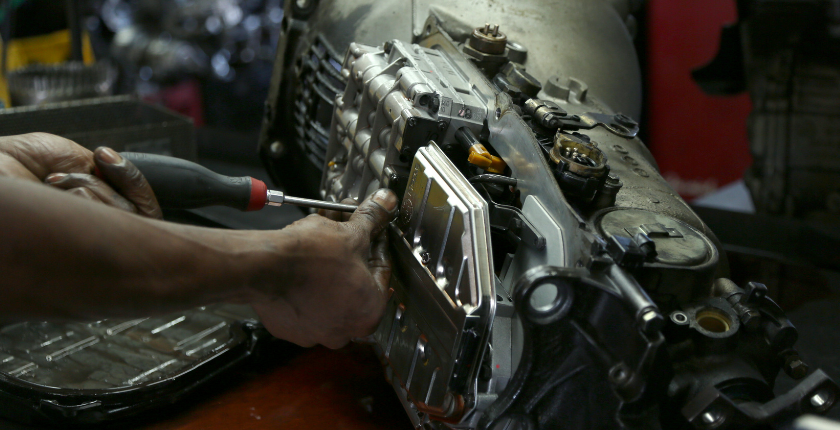
In short: if you have put the wrong oil or fluid in your gearbox, do not drive the car, and if you have not started the engine, do not start it. The wrong fluid can cause poor lubrication, overheating, slipping and damage to seals and clutches, and the risk depends on the gearbox type. The fix is to have the wrong fluid drained and replaced with the correct specification, usually by a specialist, because many gearboxes cannot simply be drained and topped up.
Put the wrong fluid in? Do not drive it. Call a gearbox technician and we will tell you what to do next, and arrange collection or recovery if you need it.
Call 0808 164 0418 (Monday to Friday, 8am to 5.30pm) or make an enquiry online.
It is an easy mistake to make. Gearbox oils and fluids look similar, labels are confusing, and “universal” products add to the problem. The good news is that it is often fixable if you act quickly. The right steps depend on what you put in and what kind of gearbox you have.
What counts as “the wrong gearbox oil”?
| What happened | Why it matters |
|---|---|
| Engine oil or the wrong gear oil in a manual gearbox | The wrong viscosity or additive package can reduce protection and affect the synchromesh, making shifts notchy or noisy |
| Manual gear oil in an automatic, or the wrong automatic fluid (ATF) | Automatics rely on specific friction properties for their clutches and valve body, so the wrong fluid can cause slipping and harsh shifts |
| The wrong fluid in a dual-clutch gearbox (DCT, DSG, Powershift) | Wet-clutch designs need a specific fluid. The wrong one can damage the clutches and hydraulic system |
| The wrong fluid in a CVT | CVTs need a manufacturer-specific fluid. The wrong one can cause belt or chain slip and wear |
| Overfilling or underfilling | Not strictly the wrong oil, but it causes foaming, overheating or lack of lubrication |
| A small top-up with a different but similar fluid | Often less serious, but still worth having checked, as mixing can alter the fluid’s properties |
Why does the right gearbox oil matter?
Gearbox oil does more than lubricate. It reduces friction and wear, carries heat away, and in automatics, DCTs and CVTs it also acts as a hydraulic fluid and controls how the clutches grip. The wrong fluid can cause:
- Poor lubrication and wear of gears, bearings and shafts.
- Overheating, which breaks down the fluid further.
- Slipping, hard shifting or judder from the wrong friction properties or viscosity.
- Seal and component damage from incompatible additives.
What to do if you have used the wrong gearbox oil
- Do not start the engine or drive. If you have only just filled it and not run the engine, leave it. If you have already driven, stop as soon as it is safe. Running the gearbox circulates the wrong fluid through it.
- Work out what went in. Keep the container or note the product name and specification, as it helps the technician.
- Check the correct specification. Look in the owner’s handbook or ask a specialist. Do not rely on a product being labelled “universal”.
- Get it drained properly. Many gearboxes are sealed or need the level set at a specific temperature using a diagnostic tool, and in automatics, DCTs and CVTs some of the old fluid stays in the torque converter, cooler and lines after a simple drain. A specialist will use the correct procedure for your gearbox.
- Refill with the correct fluid and quantity, to the manufacturer’s specification.
- Inspect for damage, especially if the car was driven. This is best done once the wrong fluid is out, so the technician can see what the gearbox is actually doing.
- Reset adaptations where needed. Some automatics, DCTs and CVTs need a software or clutch adaptation reset after a fluid change.
- Monitor it afterwards. Look for smooth shifting, steady power and no new noises, leaks or warning lights.
What not to do
- Do not keep driving “to see if it’s okay”.
- Do not top up with more of the wrong fluid or add additives to compensate.
- Do not assume a flush is the answer. Whether a flush is suitable varies by manufacturer, and some should not be flushed.
- Do not try to drain a sealed or filler-plug-only gearbox on a driveway without the correct tool and procedure.
Not sure what to do next? A specialist can identify the correct fluid, drain and refill your gearbox properly and check it for damage, so a simple mistake does not become an expensive one.
Make an enquiry or call 0808 164 0418.
Signs the wrong fluid is already causing damage
| What you notice | What it can mean | How urgent |
|---|---|---|
| Harsh, delayed or slipping gear changes | Wrong friction properties or damaged clutches | Urgent |
| Judder or shudder pulling away | Clutch or torque converter affected | Book a check soon |
| Whining, grinding or clunking | Poor lubrication or bearing wear | Urgent |
| Burning smell or overheating warning | Fluid breaking down from heat | Urgent |
| Fluid leaking | Seals affected by incompatible additives | Urgent |
| Warning light or limp mode | Fault codes stored by the gearbox control unit | Urgent |
For more on what different noises mean, see our guide to gearbox noises.
How to avoid using the wrong gearbox oil
- Check the specification, not just the name. Use the owner’s handbook, and match the manufacturer’s specification.
- Know your gearbox type. Manual, conventional automatic, dual-clutch and CVT all need different fluids. See our guides to DCT gearboxes and CVT gearboxes.
- Be careful with “universal” fluids. If the specification is not listed for your car, do not assume it is safe.
- Use a qualified technician for any gearbox fluid change, particularly on sealed automatics, DCTs and CVTs.
- Keep products labelled and stored properly, so engine oil, gear oil and ATF do not get mixed up.
Wrong gearbox oil FAQs
What happens if you put the wrong oil in a gearbox?
It can cause poor lubrication, overheating, slipping, harsh shifts and damage to seals and clutches. How serious it is depends on the gearbox type and how far the car has been driven.
Can I drive after putting the wrong fluid in?
No. Do not drive, and do not start the engine if you have not already. Driving circulates the wrong fluid and can turn a simple fix into expensive damage.
Can I just drain it and refill it myself?
Sometimes on a simple manual with drain and fill plugs, but many gearboxes are sealed, need the level set at a specific temperature, or keep fluid in places a drain does not reach. A specialist is the safer option, particularly for automatics, DCTs and CVTs.
Do I need to flush the gearbox?
Not always. Whether a flush is suitable depends on the manufacturer and the gearbox, and some should not be flushed. A specialist will use the correct procedure for yours.
Is engine oil okay in a gearbox?
No, unless the manufacturer specifically calls for it, which is rare. Engine oil has a different additive package and can harm clutches, synchromesh and seals.
Is manual gear oil the same as automatic transmission fluid?
No. They are different products with different properties. Using one in place of the other can cause serious problems.
How do I know which fluid my gearbox needs?
Check the owner’s handbook for the manufacturer’s specification, or ask a specialist. Do not rely on a product being labelled “universal”.
Talk to a gearbox specialist
Service4Service has 18 years’ experience repairing and servicing gearboxes, using OEM-approved parts and backed by a 12-month guarantee on qualifying repairs. If you have used the wrong oil, or just want a gearbox fluid check, we will explain it in plain English. See our automatic gearbox repair services.
Call 0808 164 0418 (Monday to Friday, 8am to 5.30pm) or make an enquiry online.
Need a specialist?
Speak to a gearbox technician
Diagnostics from £150 +VAT. Nationwide collection available.