
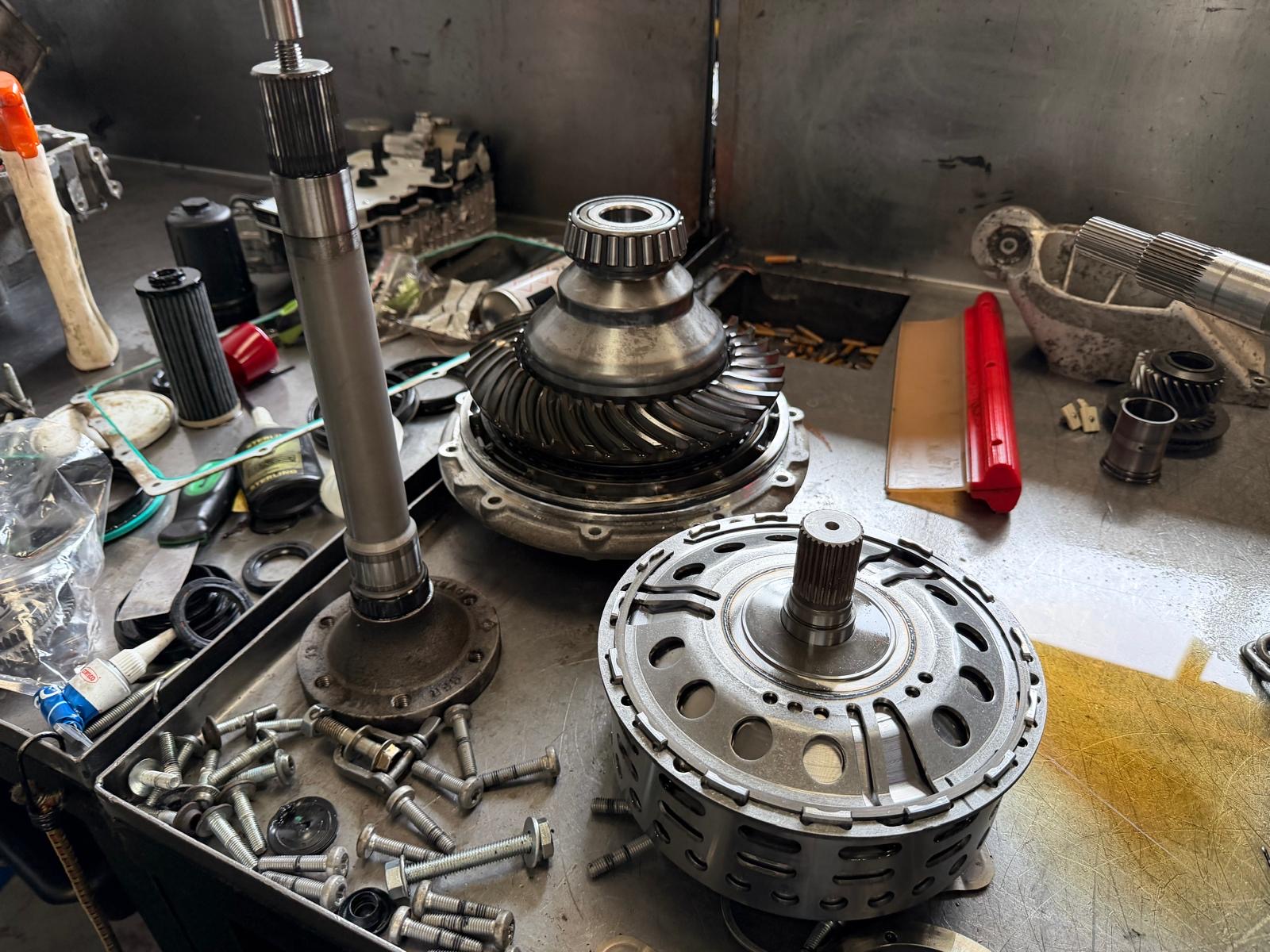
Toyota has a strong reputation for reliability, and for the most part it is deserved. But even well-engineered vehicles develop transmission faults, and Toyota automatics and CVTs are no exception. Knowing what the common problems are, what causes them, and when to act is useful whether you own a Yaris, a Corolla, a RAV4, a Prius or something else in the range.
This post covers the most frequently reported Toyota automatic gearbox and CVT faults, what typically causes them, and what a proper repair involves.
Which Gearbox Does My Toyota Have?
Toyota uses several different transmission types across the range, and the repair approach differs between them.
- CVT (e-CVT or conventional CVT): fitted to most current Yaris, Aygo X, Yaris Cross, Corolla and C-HR models, and to hybrid variants across the range. Toyota’s hybrid e-CVT uses a power-split device rather than a traditional belt-and-pulley system, which gives it different characteristics to a conventional CVT.
- Traditional automatic: fitted to older Toyota models including various Avensis, Land Cruiser, Hilux, Prius, Camry and Alphard variants. Toyota has used Aisin-sourced automatics in various configurations across these vehicles.
- Six-speed automatic: fitted to some RAV4, Land Cruiser and Hilux models, and to various commercial vehicles.
If you are unsure which transmission your Toyota has, the vehicle identification number will confirm it.
The Most Common Toyota Automatic Gearbox and CVT Problems
CVT Shudder or Vibration on Acceleration
Shuddering when accelerating from low speed, or a vibration felt through the car at consistent cruising speed, is the most commonly reported CVT complaint on Toyota models. On petrol CVT-equipped Toyotas, this is almost always related to belt slip on the pulleys. The belt transmits engine torque between two variable-diameter pulleys, and as the belt or pulley faces wear, the engagement becomes inconsistent and produces a shudder.
In many cases a CVT fluid change is the right starting point, as degraded fluid is a major contributing factor to belt slip. Where the belt or pulleys have worn beyond what fresh fluid can improve, the belt-and-pulley assembly needs attention. A diagnostic before any CVT work identifies whether the fluid or the mechanical components are the issue.
CVT Whining Noise
A whine that increases with road speed or changes pitch under acceleration is a common CVT complaint. On Toyota CVT-equipped vehicles, this is most often the belt running on pulleys that have worn, or bearing wear within the CVT unit. A low-level whine that has been present for a while and is not changing tends to be less urgent than one that has appeared suddenly or is getting progressively louder. Either way, it should be assessed rather than left.
Hesitation or Lag on Acceleration
A noticeable delay between pressing the accelerator and the car responding is a CVT characteristic that some drivers find frustrating even on a healthy transmission. But if that lag has increased over time, or if it is accompanied by a change in how the car feels under acceleration, it points to a CVT fault rather than normal behaviour. Hydraulic pressure issues, solenoid faults or a belt that is beginning to slip can all produce this symptom.
Delayed Engagement on Older Toyota Automatics
On older Toyota models with traditional Aisin automatics, particularly the Avensis, Land Cruiser and various commercial variants, a delay when selecting drive or reverse is a common early sign of trouble. This is almost always fluid-related on lower-mileage vehicles. On higher-mileage examples it can indicate solenoid wear or valve body deterioration. The Aisin units in Toyota applications are generally robust but do benefit from regular fluid changes, and those that have gone well beyond service intervals show this symptom consistently.
Gear Slipping on Older Automatics
Slip on Toyota’s traditional automatics, where the engine revs freely without the car pulling to match, points to clutch pack wear or hydraulic pressure problems. This is more commonly seen on high-mileage Land Cruiser, Hilux and Avensis models than on lower-mileage variants, and it tends to develop gradually. A gearbox that slips occasionally under hard acceleration and then holds fine at light throttle is in an earlier stage of this problem than one that slips consistently.
Prius and Hybrid e-CVT Faults
The Toyota hybrid e-CVT is a different system to a conventional CVT. It uses a planetary gear set and two motor-generators rather than a belt-and-pulley system, which means it has different failure modes. Common hybrid e-CVT complaints include whining or grinding noise from the transmission, vibration under acceleration, and warning lights related to the hybrid system or the transmission control unit.
Hybrid transmission repair requires both automotive transmission expertise and hybrid system knowledge. Not all workshops are equipped to diagnose and repair these units correctly. Service4Service has experience with Toyota hybrid transmissions alongside conventional units.
Land Cruiser and Hilux Transmission Overheating
The Land Cruiser and Hilux are regularly used for towing and demanding off-road work. The automatics fitted to these vehicles are designed for this kind of use, but they are not indestructible. Sustained towing in hot conditions, or extended low-ratio driving without adequate cooling, can cause the transmission to overheat. The consequences of overheating on these units are similar to any automatic: accelerated wear, fluid degradation and eventual limp mode. Any Toyota used for sustained towing should have its transmission fluid checked at shorter intervals than a vehicle used only on normal road driving.
Toyota CVT Fluid: Why It Matters More Than Most Drivers Realise
Toyota has been more responsible than most manufacturers in recommending CVT fluid changes, typically suggesting a service every 40,000 miles for CVT-equipped models. In practice, vehicles that follow this schedule show considerably fewer CVT problems than those that do not. The fluid in a Toyota CVT is specifically formulated for the friction characteristics of that unit, and running degraded or incorrect fluid significantly shortens the life of the belt and pulleys.
If your Toyota CVT has not had a fluid change within the last 40,000 miles, or if the service history cannot confirm one, treat it as overdue. For more on what a CVT service involves, see our post on CVT gearbox problems.
Do You Need a Toyota Dealer for Gearbox Repairs?
No. A specialist with Toyota-compatible diagnostic equipment and hands-on experience with Toyota transmissions can carry out repairs to the same standard as a dealer. Service4Service covers the full Toyota range, including all CVT variants and traditional Aisin automatics, as well as hybrid e-CVT units. All repairs come with a 12-month guarantee on parts and labour and use OEM-approved parts. 0% finance is available on qualifying repairs.
Frequently Asked Questions
What are the most common Toyota automatic gearbox problems?
CVT shudder or vibration on acceleration, CVT whining noise, hesitation on acceleration, delayed engagement on traditional automatics, and gear slipping on higher-mileage models are the most frequently reported issues. The cause varies by model and transmission type. A proper diagnostic identifies the specific fault before any repair is recommended.
How often should a Toyota CVT fluid be changed?
Toyota recommends approximately every 40,000 miles for most CVT-equipped models. Vehicles that follow this schedule consistently show significantly fewer CVT problems than those that do not. If you do not know when the CVT fluid was last changed, treat it as overdue.
Can a Toyota CVT be repaired rather than replaced?
Yes, in many cases. CVT fluid services, solenoid replacements and belt-and-pulley repairs are all carried out without replacing the complete unit. A full rebuild or exchange unit is appropriate where internal damage is widespread. The correct approach depends on what has failed and how far the fault has progressed.
My Toyota Yaris CVT is shuddering when I accelerate. What is causing it?
Shuddering on acceleration from a Toyota Yaris CVT is almost always related to belt slip on the pulleys, which can be caused by degraded CVT fluid, belt wear, or pulley wear. A CVT fluid service is the right starting point. A diagnostic will confirm whether the issue is fluid-related or whether the mechanical components need attention.
Does Service4Service cover Toyota hybrid transmissions?
Yes. Service4Service covers Toyota hybrid e-CVT units alongside conventional CVT and Aisin automatic transmissions across the full Toyota range.
If your Toyota’s automatic gearbox or CVT is showing any of these symptoms, call Service4Service on 0808 164 0418 for honest advice and a same-day response. Visit service4service.co.uk/car-repairs/gearboxes/toyota-gearbox for more on the repair service, or send an enquiry at service4service.co.uk/car-repairs/gearboxes/make-an-enquiry.