
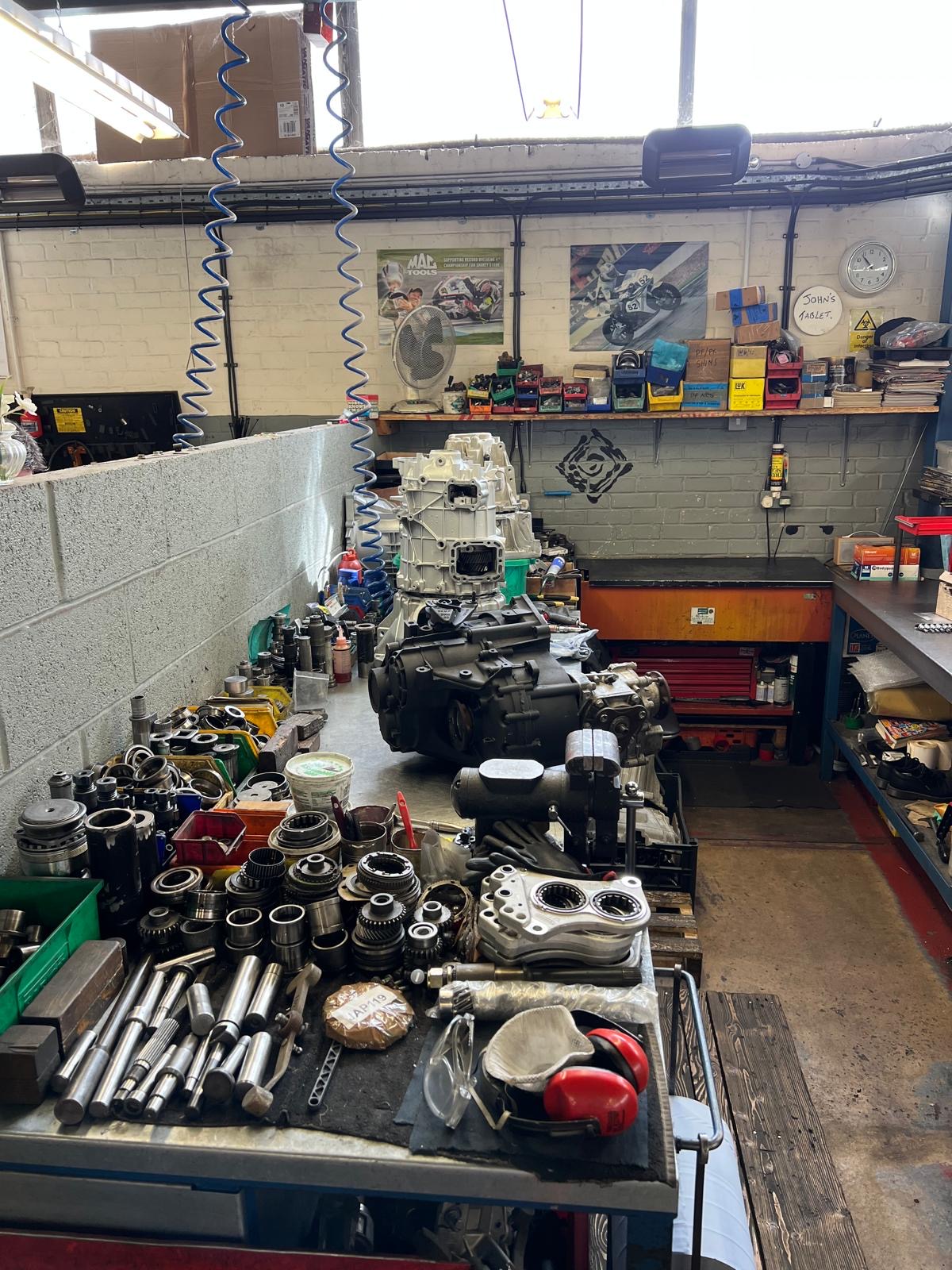
CVT stands for continuously variable transmission. Instead of fixed gear ratios, a CVT uses a belt or chain running between two variable-diameter pulleys to provide a seamless, stepless ratio change across the full speed range. It is fitted to a significant number of vehicles sold in the UK, including most Nissan Qashqais and Jukes, many Honda Jazz, CR-V and HR-V models, Toyota Yaris and Aygo variants, various Subaru models, and a wide range of smaller Audi and VW models.
CVT gearboxes are efficient and smooth when they are working correctly. When they develop a fault, the symptoms are distinct, and the repairs are specific to this type of transmission. This post covers the most common CVT problems, what causes them, and what you should expect from a repair.
How a CVT Is Different From Other Automatics
Understanding why CVT faults present the way they do helps to make sense of the repair options. In a conventional torque converter automatic or a dual-clutch, gear changes happen in steps. In a CVT, the ratio changes continuously and seamlessly, which is why engine revs on a CVT car can feel detached from road speed in a way that takes some drivers getting used to.
The core components of a CVT are the steel belt or chain, the primary and secondary pulleys, the hydraulic pressure system that controls pulley diameter, and the transmission control unit. Each of these has its own failure modes, and the symptoms depend on which component is involved.
The Most Common CVT Gearbox Problems
CVT Belt or Chain Wear
The belt or chain that runs between the two pulleys is the component under the most stress in a CVT. It transmits all the torque from the engine to the wheels and is doing so continuously, across a constantly changing ratio. As it wears, it loses the ability to grip the pulley faces cleanly, which causes slip. The driver usually experiences this as a loss of power under acceleration, a feeling that the engine is revving freely while the car is not pulling to match.
Belt wear on a CVT is progressive. It tends to be most noticeable under harder acceleration and improves at light throttle. Left without attention, a slipping belt causes accelerated pulley wear and, eventually, metallic contamination throughout the transmission that extends the repair scope significantly.
Whining or Droning Noise
A whining noise that increases with vehicle speed, or a drone that changes pitch with acceleration, is one of the most commonly reported CVT symptoms. On a CVT, this noise almost always originates from one of three places: the belt or chain, the pulleys, or the bearings that support the pulley shafts.
A whine that is present from startup and does not change much with speed is more likely a hydraulic or pump noise. A whine that tracks road speed closely is usually the belt or bearings. In either case, the noise is not a normal operating characteristic of a healthy CVT and should be assessed rather than monitored.
Shuddering or Vibration
Shuddering on a CVT car, particularly when accelerating from a standstill or at a consistent road speed, is often related to the belt slipping on the pulleys. When the belt cannot maintain consistent grip, the transmission judders rather than pulling smoothly. Contaminated or degraded CVT fluid is a common contributing factor. A fluid change resolves it in some cases. Where the belt or pulleys have physically worn, a fluid change improves the fluid condition but does not undo the mechanical wear.
Overheating
CVT transmissions run hotter than conventional automatics in many driving conditions, particularly towing, sustained hill climbing or repeated acceleration from low speed. When CVT fluid degrades, it loses its ability to manage this heat effectively. Overheating causes accelerated wear throughout the transmission, and on a CVT it tends to affect the belt and pulleys first. A CVT that regularly overheats will have a shortened service life unless the underlying cause, whether it is a fluid issue, a cooling system problem or a pattern of demanding use, is addressed.
Delayed Engagement or Hesitation
A pause between selecting drive or reverse and the CVT responding, or a hesitation before the car begins moving when you press the accelerator, points to hydraulic pressure problems within the transmission. The pulleys in a CVT are controlled by hydraulic pressure, and if that pressure is inconsistent or slow to build, the transmission cannot engage cleanly. Solenoid faults, degraded fluid or a worn pump are the most common causes.
Loss of Drive
A CVT that suddenly loses all drive, with the engine running normally but no power reaching the wheels, has usually experienced a catastrophic belt failure or a complete loss of hydraulic pressure. This is the end stage of a fault that has been developing over time. A belt that slips progressively will eventually slip completely. A hydraulic system under strain will eventually fail to generate enough pressure to maintain pulley engagement.
A car that has lost drive from a CVT failure should not be pushed or towed in a way that drags the transmission. Get it recovered to a specialist.
Can a CVT Be Repaired?
Yes, in many cases. The type of repair depends on what has failed and how far the fault has progressed.
- A fluid service addresses degraded or contaminated CVT fluid and is the correct first step where the fault is fluid-related.
- Solenoid replacement addresses specific hydraulic control faults without requiring a full strip-down.
- Belt and pulley replacement is a more involved repair but restores the core function of the transmission.
- A full CVT rebuild is appropriate where wear or damage is widespread across the unit.
- An exchange unit is the right route where the damage is too severe for repair or rebuild to be economical.
What makes CVT repair different from other automatic gearbox work is that not all workshops have experience with these units. The diagnostic approach, the correct fluid specifications, and the repair techniques for CVTs are specific to this transmission type. A specialist who works on CVTs regularly will give you an accurate assessment of whether the unit is worth repairing and what the repair involves.
CVT Fluid: The Most Preventable Cause of Failure
CVT fluid is the single most important factor in CVT longevity. It is not the same as conventional automatic transmission fluid. CVT fluid has a specific formulation designed for the friction characteristics of the belt-and-pulley system, and using the wrong fluid or leaving the right fluid in service too long causes rapid deterioration of the belt and pulleys.
Many manufacturers originally specified CVT fluid as a sealed-for-life fill. Experience in specialist workshops tells a more straightforward story: CVTs that have had regular fluid changes at around 40,000 to 60,000 miles last considerably longer than those that have not. The cost of a CVT fluid service is a fraction of the cost of a belt replacement, which is itself a fraction of the cost of a full rebuild.
If you do not know when the CVT fluid was last changed on your vehicle, treat it as overdue.
Which Vehicles Have CVT Gearboxes?
CVT transmissions are widely fitted across the market. Common UK vehicles with CVT gearboxes include the Nissan Qashqai, Juke, Micra, Note and X-Trail, the Honda Jazz, CR-V, HR-V and Civic, the Toyota Yaris, Aygo, Corolla and RAV4 hybrid, the Subaru Forester, Outback and XV, the Audi A1 and A3 with the multitronic or CVT option, and a range of smaller models from Mitsubishi, Renault and Fiat. If you are unsure whether your vehicle has a CVT, a specialist will be able to confirm it from the vehicle identification number.
Frequently Asked Questions
What are the most common CVT gearbox problems?
Belt or chain wear causing slip under acceleration, whining or droning noise at road speed, shuddering particularly from standstill, overheating during demanding driving, and hesitation or delayed engagement when selecting drive. Most of these faults develop gradually and are related to fluid condition or accumulated belt wear.
Can a CVT gearbox be repaired rather than replaced?
Yes, in many cases. Fluid services, solenoid replacements and belt-and-pulley repairs are all carried out without replacing the complete unit. A full rebuild is appropriate for widespread internal damage. An exchange unit is the right route where repair is not economical. The correct approach depends on what has failed and how far the fault has developed.
How long does a CVT gearbox last?
A CVT that is properly maintained with regular fluid changes and driven within its design limits will typically last well in excess of 100,000 miles. CVTs that reach workshops with significant problems early are almost always those that have not had fluid changes, or those that have been subjected to repeated towing or demanding driving without the cooling system being up to the task.
What fluid does a CVT gearbox use?
CVT fluid is specific to this transmission type and is not interchangeable with conventional automatic transmission fluid. The exact specification varies by vehicle manufacturer and sometimes by the specific CVT unit fitted. Using the wrong fluid causes rapid deterioration of the belt and pulleys. Always use the fluid specified for your particular vehicle’s CVT.
My CVT is making a whining noise. Is it serious?
A whining noise from a CVT is worth getting assessed. It can indicate belt wear, bearing deterioration, or hydraulic issues, none of which improve without attention. The urgency depends on how the car is driving alongside the noise. If it is also hesitating, slipping or overheating, it should be assessed promptly. If the driving feel is otherwise normal, book a diagnostic and avoid demanding driving in the meantime.
Are CVT gearboxes reliable?
CVT gearboxes can be reliable if they’re serviced correctly, but they’re less tolerant of neglect than conventional automatics. Most CVT failures come from old or incorrect fluid, which wears the belt and pulleys. A CVT that has had regular fluid changes with the correct fluid can last as long as other automatics.
If your CVT is showing any of these symptoms, call Service4Service on 0808 164 0418 for honest advice and a same-day response. Visit our gearbox repair services to find out more about the diagnostic and repair service, or send an enquiry at send an enquiry.