
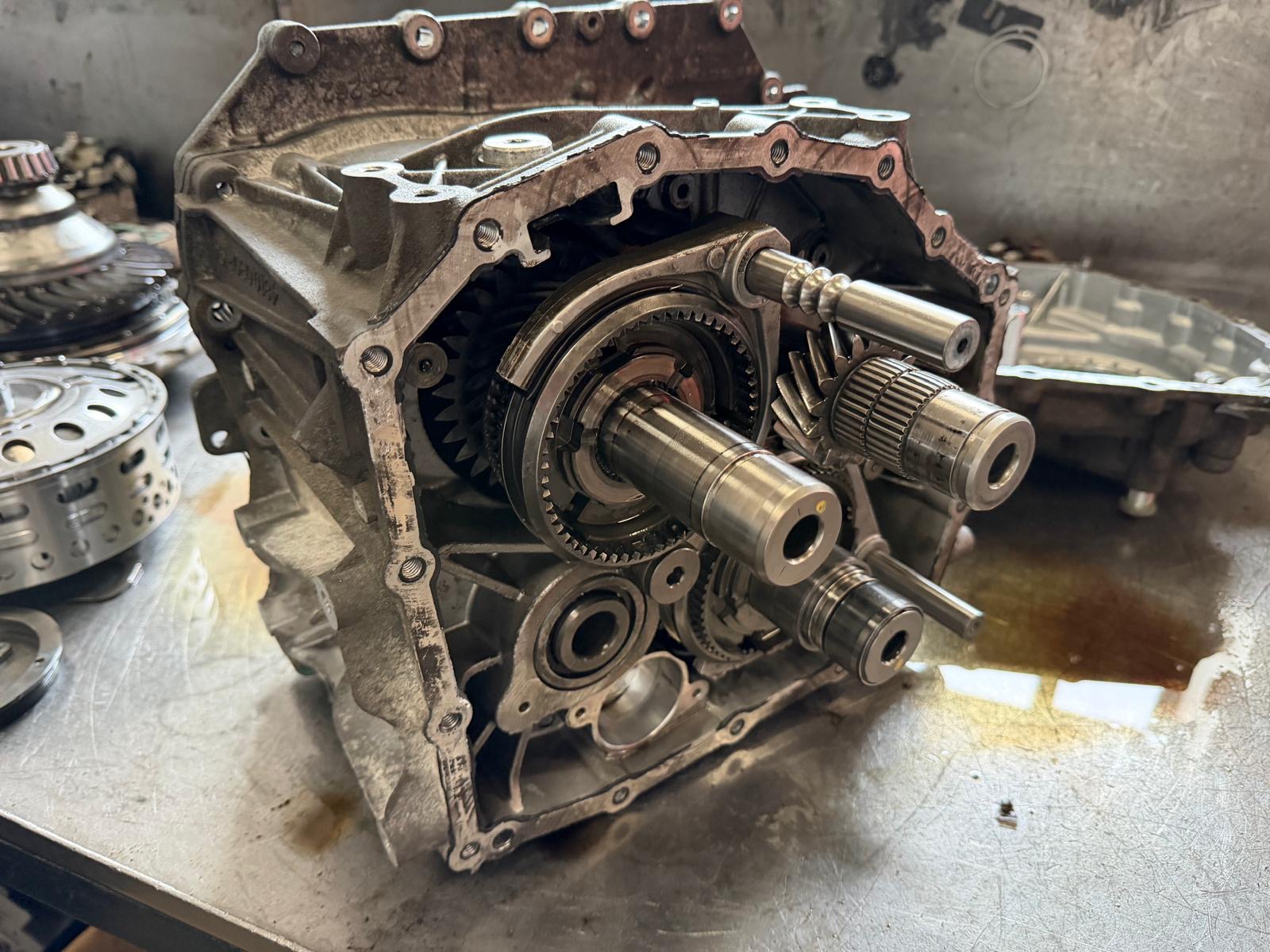
Most automatic gearbox failures do not happen suddenly. The transmission will usually give you a series of warning signs over weeks or months before it reaches a point where the car cannot be driven normally. The problem is that drivers often do not recognise what those signs mean, or they assume the symptoms will clear on their own.
They do not. And the longer they are left, the more expensive the eventual repair becomes.
This post covers the specific warning signs that an automatic gearbox is developing a problem, what each one is likely to indicate, and what you should do when you notice them.
Hesitation or Delay When Selecting Drive or Reverse
Put the car in drive and nothing happens for a second or two. Or you select reverse and feel the car resist before reluctantly engaging. This is one of the earliest warning signs that something is not right inside the automatic gearbox, and it is one that drivers frequently dismiss because the car still drives once it engages.
The delay usually points to degraded or low transmission fluid, a worn solenoid, or early deterioration in the valve body. Caught at this stage, any of those is a straightforward repair. Left until the hesitation becomes a full refusal to engage, or until the fluid has been in such poor condition for so long that it has caused internal wear, the repair scope expands considerably.
If you notice a delay when selecting drive or reverse that was not there six months ago, book a diagnostic. That is the point at which it is cheapest to deal with.
Slipping Between Gears
Gear slip is when the engine revs rise as if the car is accelerating but the vehicle does not actually pull away to match. It can happen under moderate acceleration, or it may only be noticeable when you accelerate hard. Either way, it means the transmission is not maintaining the gear it is supposed to be in.
On a traditional torque converter automatic, this is most commonly caused by worn clutch packs, hydraulic pressure problems in the valve body, or degraded fluid that can no longer maintain the pressures needed for clean gear engagement. On dual-clutch automatics like DSG and PDK, slip is more often related to clutch pack wear.
Slip does not settle on its own. It gets worse. And the secondary damage it causes to other internal components makes the repair progressively more expensive the longer it continues. If the car is slipping, it should not be driven any more than necessary. See our post on whether you can drive with a slipping gearbox for a more detailed look at the risks.
Juddering or Shuddering
A shudder when pulling away from a standstill, a judder in slow traffic, or a vibration felt through the car at motorway speeds all indicate that the transmission is not engaging as cleanly as it should be.
Low-speed juddering on a dual-clutch automatic is almost always a clutch pack issue. On a torque converter automatic, a vibration at higher speeds is frequently caused by the torque converter clutch, particularly when the transmission fluid has degraded past its useful life. Rough gear changes that feel like a clunk or bump between gears often point to valve body wear or solenoid problems.
The exact cause matters because different causes have different repairs. A diagnostic identifies which it is before any work is recommended.
Unusual Noises From the Gearbox
A healthy automatic gearbox runs quietly. Any new noise coming from the transmission area is worth taking seriously.
- A whine that changes with road speed usually indicates bearing wear or low fluid.
- A clunk when the gearbox changes gear suggests solenoid problems, valve body wear or a worn torque converter.
- A grinding noise under load often points to clutch pack wear or internal damage.
- A humming that increases with vehicle speed can indicate bearing deterioration or, in some cases, a torque converter problem.
None of these noises improve without attention. They are the gearbox telling you that something inside is under strain.
The Transmission Warning Light
The transmission warning light, or a check engine light with a transmission-related code, means the car’s onboard diagnostic system has logged a fault. It does not automatically mean the gearbox is about to fail. What it does mean is that something has triggered the system, and that something needs to be read by a specialist with the right diagnostic equipment.
A standard OBD reader from a general garage reads top-level codes. These tell you that there is a transmission fault, but they rarely tell you which specific component is involved or what the fault data looks like in detail. Automatic gearboxes, particularly modern units like ZF eight-speeds, DSG, Mechatronic and CVT, store a much richer set of diagnostic data than a generic scanner can access. A specialist using manufacturer-specific software gets a significantly more complete picture.
Acting on a warning light promptly is almost always cheaper than waiting for it to be accompanied by drivability symptoms. For more on this, see our post on what fault codes mean for your transmission.
Limp Mode
If the car has locked itself into one gear, cut its top speed, and feels sluggish and unresponsive, it is in limp home mode. The transmission control unit has detected a fault it cannot manage safely and has restricted the vehicle to protect the gearbox from further damage.
Limp mode is the transmission’s last line of defence. It is not a warning sign to monitor or reset without addressing. Driving in limp mode, or using a code reader to clear it without identifying and fixing the underlying cause, risks turning a repairable fault into one that requires a full rebuild or replacement unit.
If your automatic has gone into limp mode, the car should not be driven normally. Get it to a specialist as soon as possible.
Burning Smell From the Transmission
A burning smell from the gearbox area, particularly during or after heavy traffic driving, usually indicates that the transmission fluid is overheating or has degraded to the point where it is no longer providing adequate lubrication. Transmission fluid that has burned smells distinct from engine oil or brake smell. It tends to be a sharp, acrid smell rather than the oily smell of engine oil.
Overheating causes accelerated wear throughout the gearbox. If you smell burning from the transmission, the car should not be driven until the cause is identified.
Fluid Leaks
Automatic transmission fluid is typically red or pink when fresh, darkening to brown or black as it ages. If you notice a reddish stain under where the car is parked, or if the transmission fluid level on the dipstick has dropped, the gearbox has a leak. Running an automatic gearbox on low fluid causes rapid wear and, if the fluid drops low enough, catastrophic internal damage.
Transmission fluid leaks come from worn seals, damaged gaskets or, in some cases, a cracked cooler line. Most leaks are repairable without a full gearbox rebuild, but they need to be found and fixed before the fluid level causes internal damage. If you notice a fluid leak, top up with the correct fluid specification for your vehicle and get it to a specialist quickly.
Delayed Gear Changes or Missed Gears
An automatic that is slow to select the next gear when you accelerate, or one that seems to skip a gear entirely and jump straight to a higher ratio, is not behaving as it should. Delayed or erratic upshifts can be caused by solenoid faults, valve body wear, degraded fluid, or faults in the transmission control unit. On dual-clutch units, it can also indicate clutch pack issues.
Erratic gear selection puts additional strain on the components involved in each shift. Like most automatic gearbox symptoms, it is a fault that compounds over time rather than one that holds steady.
When to Act
The consistent thread across all of these warning signs is that none of them improve without attention, and most of them cause additional damage the longer they are left. Getting a symptom assessed early is nearly always less disruptive and less expensive than waiting for it to develop.
A diagnostic does not commit you to any repair. It tells you what has failed, what fixing it involves, and what it will cost before any work begins. That is the starting point for every vehicle that comes into Service4Service.
Frequently Asked Questions
What are the most common warning signs that an automatic gearbox is failing?
The most common signs are hesitation when selecting drive or reverse, gear slip where the engine revs but the car does not pull, juddering when pulling away, unusual noises from the gearbox, a transmission warning light, and the car entering limp mode. Any one of these is worth having assessed. Several of them together indicates a fault that needs prompt attention.
Is it safe to drive with a transmission warning light on?
It depends on whether the car is also showing drivability symptoms. A warning light with no other symptoms should be read and assessed promptly but does not necessarily mean the car is unsafe to drive to a specialist. A warning light accompanied by slipping, limp mode or unusual noises means the car should be driven as little as possible. Calling a specialist and describing what you are experiencing will get you an honest answer on what to do.
My automatic gearbox has started hesitating when I put it in drive. Is that serious?
It is worth getting checked, yes. A hesitation when selecting drive is often an early sign of fluid degradation, a solenoid fault or early valve body wear. At that stage, the repair is usually contained and relatively straightforward. Left until the hesitation becomes a more significant engagement problem, the repair scope tends to expand. Early diagnosis is almost always the cheaper route.
Why does my automatic gearbox slip?
Slip in an automatic gearbox is most commonly caused by worn clutch packs, hydraulic pressure problems in the valve body, or degraded transmission fluid. On dual-clutch units, clutch pack wear is the primary cause. A proper diagnostic identifies the specific cause before any repair is recommended.
Can a gearbox warning light clear itself?
The light may go out if a temporary fault clears, but the code remains stored in the transmission control unit. A warning light that came on and went off has still logged a fault that a specialist can read. It should still be investigated, because intermittent faults tend to become consistent ones over time.
If your automatic gearbox is showing any of these warning signs, call Service4Service on 0808 164 0418 for a same-day response and honest advice. You can also visit service4service.co.uk/car-repairs/gearboxes to find out more about the diagnostic and repair service, or send an enquiry online at service4service.co.uk/car-repairs/gearboxes/make-an-enquiry.
 Malachy
  Ellis
Ellis