
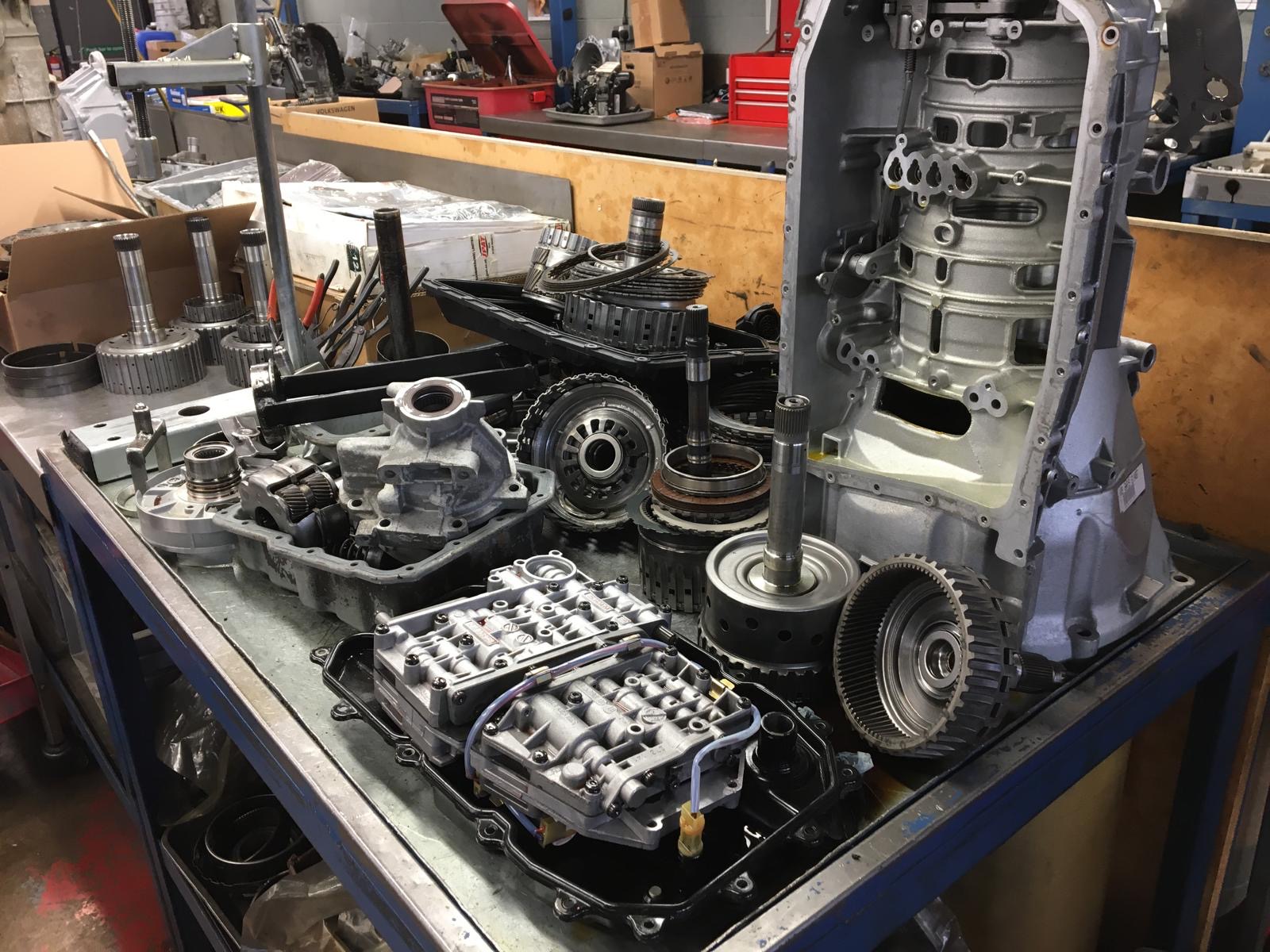
An automatic that will not go into reverse, while driving forward normally, usually has a fault in the specific clutch pack, band or hydraulic circuit that serves reverse gear. Because reverse uses components that the forward gears do not, it is entirely possible for reverse to fail alone, and the pattern of the failure, whether reverse is absent, delayed or engages with a bang, narrows the cause considerably before the gearbox is even inspected.
Why reverse can fail on its own
Inside an automatic, each gear is created by applying a particular combination of clutches and, on some designs, brake bands. Reverse has its own dedicated friction element in most gearboxes. If that clutch pack wears out, its piston seal fails, or the hydraulic passage feeding it leaks pressure, reverse disappears while every forward gear carries on as normal. That is why a missing reverse does not automatically mean the whole gearbox is worn out, and equally why it cannot be fixed without addressing that specific circuit.
The reverse clutch also tends to live a hard life. It takes up drive from a standstill every time, often on a slope, and in many designs it handles high torque through a small friction area. On several common gearboxes a worn reverse element is a known pattern long before the forward gears show any wear at all.
What the symptoms tell you
No reverse at all, with the engine revving freely in R, points to a failed clutch pack or a pressure loss in its circuit. Delayed reverse, where the car pauses several seconds before engaging, points to a leaking seal or worn valve body letting pressure bleed away, the reverse specific version of the fault we cover in our post on delayed engagement. Reverse that engages with a bang suggests pressure arriving late and then all at once. Reverse that works cold but disappears hot, or the opposite, points to seals and fluid condition. And reverse that slips on a slope but holds on the flat is a worn clutch part way through failing.
One more check before assuming the worst: if the selector will not physically move to R, or the car does not seem to know it is in reverse, the fault may be the selector mechanism, cable or range sensor rather than the gearbox internals. A car that shows R on the dash but delivers nothing is a different fault from a car that never registers R at all.
Fluid first, always
Low fluid affects reverse early on some gearboxes, because of where the reverse circuit draws its pressure. A car that has lost reverse after developing a leak may want nothing more than the leak fixed and the level restored. Burnt or contaminated fluid can also stick the valves that route pressure to reverse. This is why the first step of any diagnosis is fluid level and condition, followed by a code scan and pressure testing, before any conclusion about the clutch pack itself.
The realistic repair picture
If the cause is fluid, a leak, the selector or the valve body, the repair stays outside the gearbox or at its edges. If the reverse clutch pack or its piston seals have failed, the gearbox has to come out and be opened, and at that point a specialist will assess the rest of the unit while it is apart, since much of the labour is shared. That is the honest crossroads of this fault: it is either a modest repair or a rebuild decision, and a proper diagnosis tells you which before any money is committed. Our post on automatic gearbox rebuilds explains what the bigger job involves.
Frequently asked questions
Why won’t my automatic go into reverse but drives fine?
Reverse uses its own clutch pack and hydraulic circuit in most automatics, so it can fail alone through clutch wear, a failed seal or a pressure leak while the forward gears remain healthy.
Can low fluid stop reverse working?
Yes. On many gearboxes reverse is affected early when the fluid is low, and restoring the correct level after fixing a leak can bring reverse back if no damage has been done.
Why does reverse engage with a bang?
A harsh reverse engagement usually means hydraulic pressure is arriving late and then abruptly, typically from a worn valve body or leaking seal, and it deserves attention before the shock loads cause further damage.
Does losing reverse mean I need a new gearbox?
Not necessarily. Fluid, selector and valve body causes are repairable without opening the gearbox. A worn reverse clutch does mean opening the unit, but that is a rebuild decision, not automatically a replacement.
Lost reverse? Get a straight answer on whether it is a small fix or a big one. Call Service4Service on 0808 164 0418 or send an enquiry for a proper diagnosis, honest advice and a fixed price quote with a 12 month guarantee.
 Ellis
Ellis