
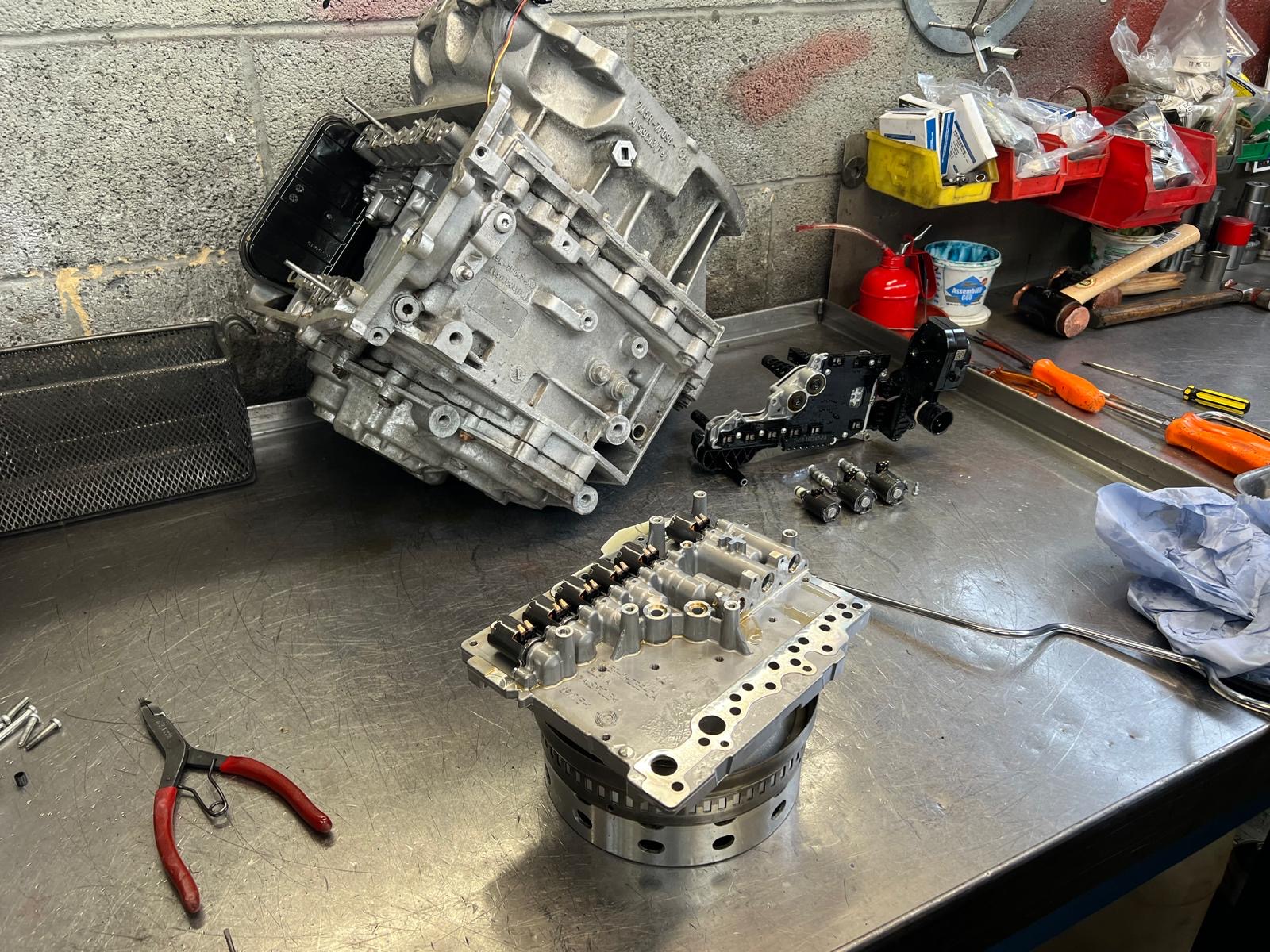
A gearbox rebuild is not the same as a repair, and it is not the same as a replacement. It sits between the two, and understanding what it actually involves helps to make sense of why it is often the most sensible route for a vehicle with widespread internal wear.
This post covers what an automatic gearbox rebuild involves step by step, when a rebuild is the right option rather than a targeted repair or a complete replacement unit, and what you should expect from a specialist who carries one out.
What Is an Automatic Gearbox Rebuild?
A rebuild strips the automatic gearbox completely, inspects every internal component, and replaces everything that is worn, damaged or outside specification. The original casing and core structural components are retained and reused. The internal working parts, including clutch packs, solenoids, seals, bearings, thrust washers, valve body and filter, are replaced as needed. The gearbox is then reassembled, refilled with the correct specification fluid, and tested before being returned to the vehicle.
The result is a transmission that has been returned to a near-original condition of function. It is not a reconditioned unit from another vehicle. It is your original gearbox, rebuilt to a known and verified standard.
What Happens During a Rebuild
Removal
The gearbox is removed from the vehicle. On many modern cars this is a more involved process than it once was, involving the removal of subframes, driveshafts and supporting components to give access to the transmission. This is a significant portion of the total labour time on a rebuild job, and it is why the labour cost on a gearbox rebuild is not trivial even before the parts are counted.
Strip-Down and Inspection
With the gearbox on the bench, a specialist strips it down completely. Every internal component is cleaned and inspected. This includes the clutch packs and their friction plates, the solenoids and valve body, the torque converter, the planetary gear sets and their bearings, the thrust washers, the seals and gaskets throughout the unit, and the transmission fluid pump.
What the strip-down reveals is the full picture of what has happened inside the gearbox. A fault that presented as gear slip at the surface level might reveal clutch pack wear across multiple packs, a valve body with worn bores, and bearing wear that was contributing to noise but not yet causing a drivability symptom. The inspection determines exactly what needs replacing and confirms the scope of the rebuild before any parts are ordered.
Parts Replacement
Every component that is outside specification or has worn beyond its service limits is replaced. A thorough rebuild does not reassemble with marginal components on the basis that they might last a bit longer. The point of a rebuild is to return the gearbox to a condition where it will perform reliably, and leaving worn components in place undermines that.
On most rebuilds this means new clutch packs, new seals and gaskets throughout, new solenoids if they are worn or suspect, a new filter, and attention to the valve body. Bearings and thrust washers are replaced where they are outside tolerance. The torque converter is inspected and rebuilt or replaced as required.
Reassembly
The gearbox is reassembled to specification. This is a precision process. Clutch pack clearances, end-play measurements and solenoid specifications all need to be within tight tolerances for the finished unit to shift correctly. A rebuild reassembled without attention to these measurements will not perform correctly even with new parts throughout.
Fluid Fill and Adaptation
The correct transmission fluid is filled to the manufacturer’s specification. On vehicles where the transmission control unit has adaptation parameters, these are reset to allow the unit to relearn from a known baseline rather than carrying forward corrections that were built around a worn and degraded transmission.
Testing
Before the gearbox is refitted to the vehicle, a specialist checks the reassembled unit for leaks and confirms that the internal components are seating correctly. Once refitted, the vehicle is road tested and the gearbox is checked under load across its full range of operating conditions.
When Is a Rebuild the Right Option?
A rebuild is not always the correct choice, and a specialist will be honest about when it is and is not. The situations where a rebuild makes most sense are:
When Internal Wear Is Too Widespread for Targeted Repair
A targeted repair addresses a specific component. Where the diagnostic and strip-down reveal wear across multiple internal components, a targeted repair does not address the underlying condition of the gearbox. A rebuild that replaces everything worn gives the gearbox a known condition and a better long-term outlook than a series of individual repairs.
When the Vehicle Has Significant Value or Remaining Life
For a vehicle that is going to be kept for another five to ten years, or one with significant market value, a rebuild is almost always a better long-term investment than a replacement unit. The original gearbox is rebuilt to a known standard with a warranty. The alternative of a reconditioned unit from another vehicle introduces unknowns about the history of that unit.
When a Reconditioned Exchange Unit Is Not Available
For older vehicles or less common models, reconditioned exchange units are not always available. In those cases a rebuild of the original unit is the only practical option other than sourcing a used unit of unknown history.
When Is a Replacement Unit the Better Choice?
There are situations where fitting a reconditioned or new unit is the more practical route. If the casing or core structure of the original gearbox has been damaged, the starting point for a rebuild is already compromised. If the cost of rebuilding the original unit approaches or exceeds the cost of a quality reconditioned exchange unit with its own warranty, the economics favour replacement. A specialist will tell you honestly which applies to your vehicle.
What to Look For in a Gearbox Rebuild Specialist
Not every garage that advertises gearbox work has the equipment, experience or parts supply to carry out a proper rebuild on a modern automatic. The specific things worth checking are whether the workshop has manufacturer-compatible diagnostic equipment for your vehicle, whether they carry out in-house rebuilds rather than sending the gearbox away, whether the completed rebuild comes with a warranty on parts and labour, and whether they can show you the parts they are replacing.
At Service4Service, all automatic gearbox rebuilds are carried out by specialist technicians with over 18 years of experience and more than 20,000 gearbox rebuilds completed. All rebuild work comes with a 12-month guarantee on parts and labour. OEM-approved parts are used throughout. 0% finance is available on qualifying repairs.
Frequently Asked Questions
What is the difference between a gearbox rebuild and a gearbox replacement?
A rebuild retains the original gearbox casing and core structure and replaces the internal components that are worn or damaged. The result is your original gearbox returned to a near-original standard. A replacement removes the original gearbox and fits either a new or reconditioned unit of the same type. A rebuild is usually the more cost-effective option for vehicles where the original unit is sound structurally and worth the investment.
How long does an automatic gearbox rebuild take?
A full rebuild typically takes between three and five working days once parts are available. More complex units or vehicles where parts sourcing takes longer may extend this. Service4Service will confirm a timescale after the diagnostic and before any work begins.
How long will a rebuilt automatic gearbox last?
A rebuild carried out properly, with all worn components replaced and the unit reassembled to specification, returns the gearbox to near-original condition. How long it lasts from that point depends on the same factors that determine any transmission’s longevity: fluid maintenance at the correct intervals, driving conditions, and whether any future symptoms are addressed promptly rather than left. A rebuilt gearbox maintained correctly will last as long as an original unit.
Does a rebuilt gearbox come with a warranty?
All automatic gearbox rebuild work carried out by Service4Service comes with a 12-month guarantee on parts and labour.
Is a rebuilt gearbox better than a reconditioned one?
Both can be good outcomes when carried out to a proper standard. A rebuild uses your original gearbox, which means you know the history of the unit and can see exactly what has been replaced. A reconditioned exchange unit has been rebuilt by a third party, and the history of the original unit is unknown. For vehicles where a quality exchange unit is available and the economics are right, either is a valid option. A specialist will advise which makes more sense for your vehicle.
To find out whether your automatic gearbox needs a rebuild, a targeted repair or a replacement unit, call Service4Service on 0808 164 0418 for a diagnostic and honest advice. Visit service4service.co.uk/car-repairs/gearboxes for more information, or send an enquiry at service4service.co.uk/car-repairs/gearboxes/make-an-enquiry. All repairs come with a fixed-price quote before any work begins.