
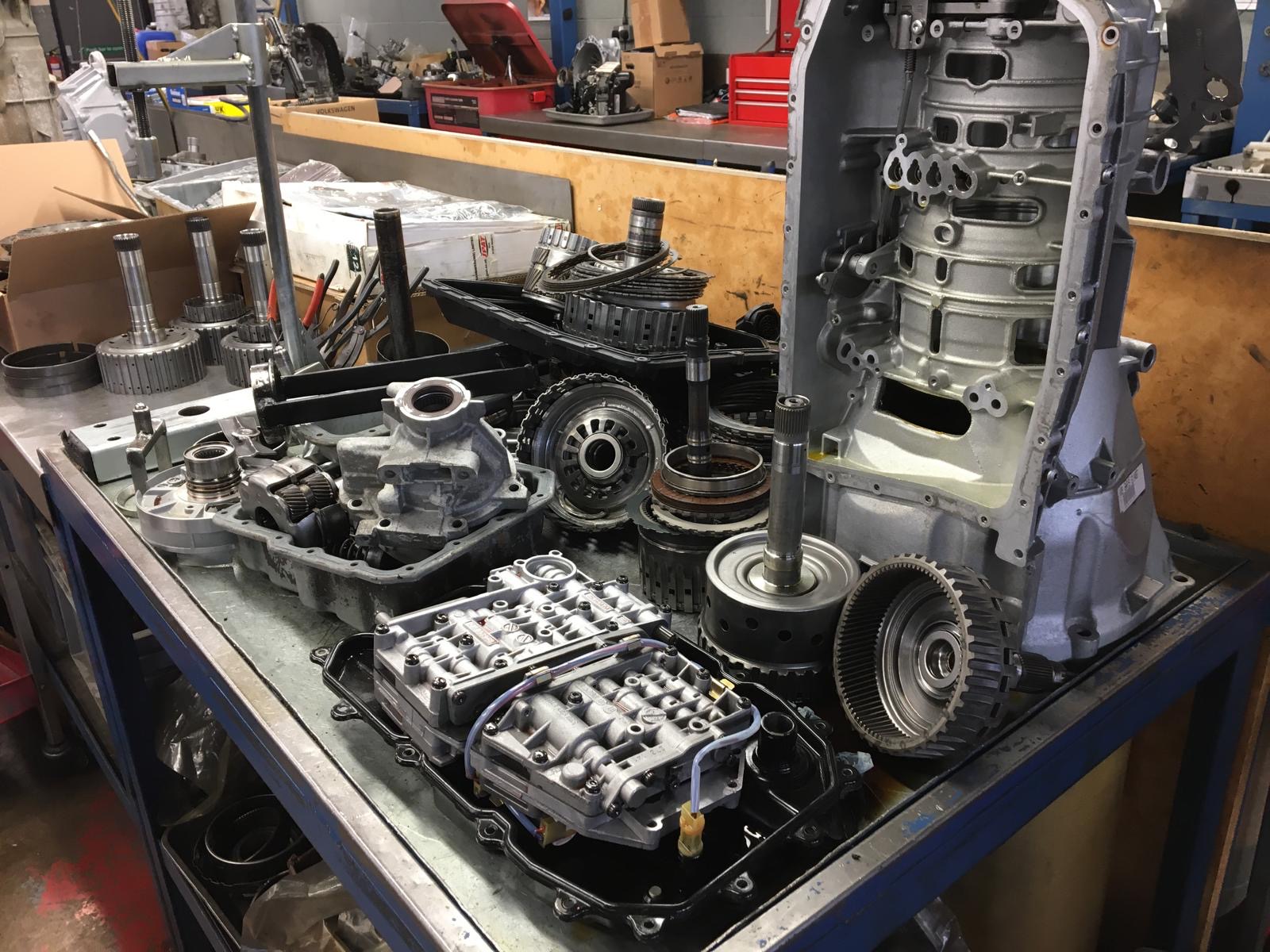
DSG, S tronic, DCT, PDK, EDC and PowerShift are all brand names for the same underlying idea: a dual clutch gearbox, where two clutches serve alternate gears and changes happen as a rapid handover between them. The mechanism is shared, but the implementations differ in ways that matter enormously to owners, from wet versus dry clutches to which units have well documented weaknesses. If you already know how a dual clutch transmission works, this is the practical layer on top: which brand fits what, and what each version means for reliability and repair.
The one distinction that matters: wet or dry clutches
Every dual clutch gearbox is either wet, with clutches running in cooling oil, or dry, with clutches running in air like a manual. Wet designs handle more torque and shrug off heat, which suits bigger engines and hard use. Dry designs are lighter and more efficient but have far less thermal headroom, and heat is exactly what stop start traffic and hill starts generate. It is no coincidence that the most complained about dual clutch units in Britain, the dry seven speed DSG and the Ford PowerShift, are dry designs asked to do urban work. When judder and clutch wear stories circulate, wet or dry is usually the dividing line.
Brand by brand
Volkswagen Group’s DSG, badged S tronic at Audi, is the most numerous in the UK, fitted across VW, Audi, SEAT and Skoda. The six speed DQ250 is a wet clutch design with a long, mostly solid record. The seven speed DQ200 is the dry unit, known for mechatronic faults and clutch judder, while the larger seven speed wet DQ381 and DQ500 units serve more powerful models and behave more like the six speed. Our post on VW DSG problems digs into the details.
Ford’s PowerShift exists in both forms: the dry DPS6 fitted to Fiesta and Focus, one of the most fault documented gearboxes of its era, and wet versions used elsewhere. Renault, Dacia and some Mercedes small cars use the EDC, generally a dry design in the smaller applications with a mixed record. Hyundai and Kia’s DCT began dry on models like the i30 and Ceed, with wet eight speed versions arriving on stronger engines. BMW’s DCT and Porsche’s PDK are wet clutch performance units with strong reliability records, reflecting both design and budget. Mercedes uses its 7G-DCT and 8G-DCT wet units in the A-Class family, and Alfa Romeo’s TCT rounds out the field.
What they share when they age
Whatever the badge, dual clutch gearboxes age in the same three places: the clutches themselves, which are wear items; the mechatronic, the combined valve body and control unit whose accumulators, seals and solenoids fail with heat cycles; and the fluid, which in wet designs cools and works the clutches and degrades accordingly. The symptoms are equally shared: low speed judder, hesitation, flaring between gears, harsh engagement and a flashing gear display when faults are logged. What differs by brand is mostly which of the three fails first and how expensive the answer is. Servicing is the common defence: wet clutch units in particular repay fluid and filter changes on schedule with dramatically longer clutch and mechatronic life.
Buying and owning one
None of this should put you off dual clutch ownership: tens of millions of them work faithfully, and the driving experience is genuinely excellent. The practical rules are simple. Prefer wet clutch versions if you tow, drive hard or live in traffic. Insist on service history for the gearbox specifically, not just the engine. On a test drive, pay attention below 20 mph, where dual clutch faults live: judder, hesitation and clunks at parking speeds tell you more than any motorway cruise. And if a used example shows a flashing PRNDS or gear display, price a mechatronic into your offer or walk away.
Frequently asked questions
Is a DSG the same as a DCT?
Mechanically yes. DSG is Volkswagen’s brand name, DCT is the generic term also used by BMW, Hyundai and Kia, and S tronic, PDK, EDC and PowerShift are other manufacturers’ names for dual clutch gearboxes.
Which is better, a wet or dry clutch DSG?
Wet clutch versions handle more torque and heat and generally prove more durable in demanding use. Dry versions are more efficient but less tolerant of stop start traffic and hills.
Which dual clutch gearboxes have the most problems?
The dry seven speed VW DQ200 and the dry Ford PowerShift DPS6 are the most widely documented for clutch and mechatronic faults. Wet clutch units from BMW, Porsche and VW’s larger boxes have much stronger records.
Do dual clutch gearboxes need servicing?
Yes. Wet clutch designs need fluid and filter changes on schedule, and even dry designs benefit from mechatronic fluid servicing where specified. Skipped servicing is behind a large share of failures.
Whatever badge your dual clutch gearbox wears, we know its habits. Call Service4Service on 0808 164 0418 or send an enquiry for honest advice and a fixed price quote with a 12 month guarantee.
 Ellis
Ellis