
A plug-in hybrid, or PHEV, is a car with both a petrol or diesel engine and an electric motor, plus a battery large enough to drive on electricity alone for a limited distance. Unlike an ordinary hybrid, you can charge the battery from a socket or charge point. Once the battery runs low, the engine takes over and the car carries on like a normal hybrid, so there is no range worry.
How a plug-in hybrid works
A PHEV has three main parts: an engine, an electric motor and a high-voltage battery. You can plug the car in to fill the battery, and the car then drives on electric power for a stretch. The distance varies from car to car, so check the figure for the model you are looking at, and real-world range is usually lower than the headline number.
When the battery is depleted, or when you ask for more power, the engine starts. Most PHEVs can also use the engine to help charge the battery, and they recover energy when you brake, which is called regenerative braking.
Driving modes
Most plug-in hybrids let you choose how the car behaves. Names differ between makers, but the ideas are similar.
- Electric mode. The car runs on the motor for as long as the battery allows.
- Hybrid or auto mode. The car decides when to use the engine, the motor or both.
- Battery hold or save mode. The car keeps the battery charge for later, for example to use in town.
- Charge mode. The engine charges the battery while you drive, which is usually inefficient.
What the gearbox does in a PHEV
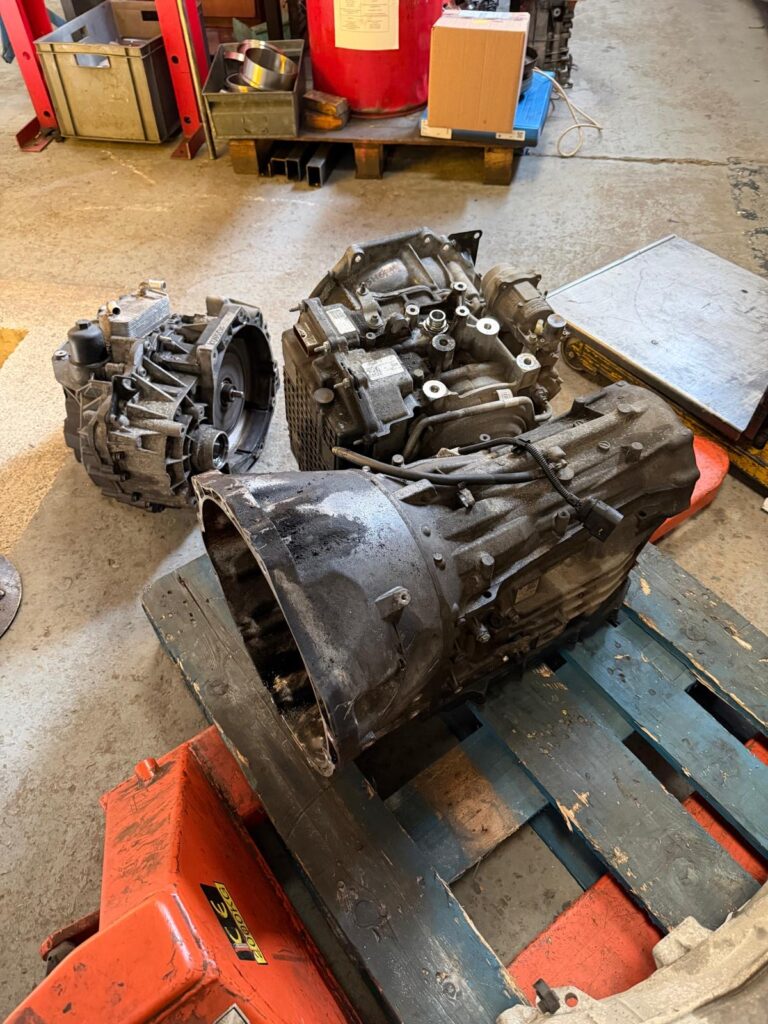
Plug-in hybrids do not all use the same transmission. Some use a conventional automatic or dual-clutch gearbox with an electric motor built in. Others, such as Toyota-style systems, use a power-split e-CVT. A few use a single-ratio drive. Our guide to hybrid gearbox problems explains the types.
The type matters if something goes wrong. A jerking or hesitating plug-in hybrid may have a gearbox fault, a hybrid control fault or a software issue.
The benefits
- You can do short daily journeys on electricity alone if you charge regularly
- There is no range anxiety, because the engine is there as a backup
- Regenerative braking recovers energy and reduces brake wear
- Quiet, smooth driving in electric mode
The drawbacks
- The car is heavier than the petrol equivalent, because it carries a battery and motor
- If you rarely charge it, you are carrying the extra weight for little benefit, and fuel use can be higher than a normal car
- There is more to go wrong, as the car has two power systems
- Repairs on the high-voltage parts need trained technicians
Looking after a plug-in hybrid
- Charge it regularly, because the design assumes you will
- Keep up with servicing, including any gearbox fluid checks
- Act on warning lights, and have codes read from both the transmission and hybrid system
- Never touch the orange high-voltage cables
Our guide to hybrid warning lights and limp mode explains what to do if one appears.
Plug-in hybrid or mild hybrid?
A mild hybrid has a small battery and motor that assist the engine but cannot drive the car alone, and you cannot plug it in. See our explainers on what a mild hybrid is and plug-in hybrids versus mild hybrids.
Who a plug-in hybrid suits
- Drivers who can charge at home or work most days
- People whose daily trips are short enough to run mostly on electricity
- Households wanting one car for both short commutes and long trips
- Drivers who like quiet, smooth urban driving
If you cannot charge regularly, the case for a plug-in is much weaker, and a full or mild hybrid may suit you better.
Charging in practice
Most owners charge at home on a standard socket or a dedicated charge point. A plug-in hybrid battery is small compared with a full electric car, so a full charge takes a modest amount of time, which varies by model and charger. Public charging is available but is not essential for most owners. Check your handbook for the connector type and any charging limits.
The important habit is simply to plug in whenever you can. The car is designed to do its best work with a charged battery.
Is a plug-in hybrid the right choice for you?
The best plug-in hybrid owner is someone who charges regularly and drives mainly short distances, with the occasional longer trip. For that driver, the car can use little fuel and still go anywhere. For a driver who cannot charge, or who covers long distances daily, a plug-in is often a heavy, expensive way to drive a petrol car. Think honestly about how you really drive before you decide. If in doubt, a full or mild hybrid may suit you better.
Frequently asked questions
What does PHEV stand for?
PHEV stands for plug-in hybrid electric vehicle. It has an engine, an electric motor and a battery you can charge from the mains.
How does a plug-in hybrid differ from a normal hybrid?
A plug-in hybrid has a larger battery that you can charge from a socket, so it can drive further on electricity alone.
Do I have to plug in a PHEV?
No, it will run as a normal hybrid without charging, but you lose most of the benefit and may use more fuel.
How far can a plug-in hybrid go on electric power?
It depends on the model and battery size, so check the figure for your car. Real-world range is usually less than the quoted number.
Do plug-in hybrids have gearboxes?
Yes, though the type varies. Some have a conventional automatic or dual-clutch gearbox, and some have a power-split e-CVT.
Can a plug-in hybrid be charged at home?
Yes, usually from a standard socket or a dedicated home charge point. Check your handbook for the connector and charging limits.
Is a plug-in hybrid more complicated than a normal car?
Yes. It has a battery, a motor and power electronics in addition to the engine, so there are more parts that can need attention.
Next steps
Plug-in hybrid jerking or showing a transmission warning? Call 0808 164 0418 or get a free quote. Related reading: Mild hybrid explained, PHEV vs MHEV, Hybrid gearbox problems explained.
Need a specialist?
Speak to a gearbox technician
Diagnostics from £150 +VAT. Nationwide collection available.