
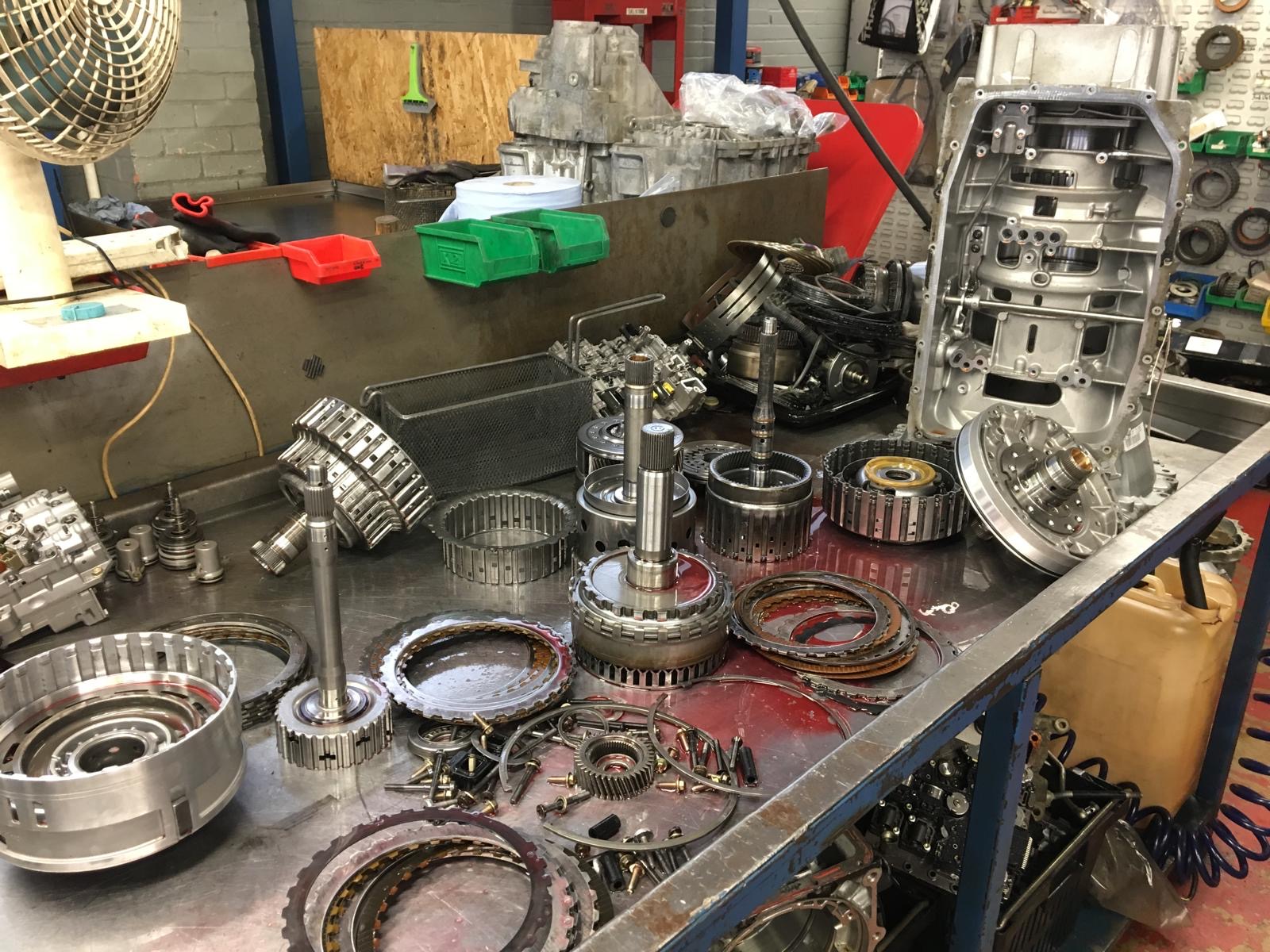
Shift solenoids are the electrically operated valves that execute every gear change in an automatic, and when one fails the gearbox loses specific gears, shifts harshly, flares, or drops into limp mode. They are small, relatively inexpensive components, they log clear fault codes when they misbehave, and they are behind a remarkable share of the gearbox complaints that owners fear are terminal. A solenoid fault is, in most cases, the good news version of an automatic gearbox problem, provided it is diagnosed properly and repaired before the harsh running it causes wears anything else.
What solenoids do inside the gearbox
The transmission computer decides when to change gear, but electricity cannot move a clutch. Solenoids bridge the gap: energise the coil and a small valve moves, routing or trimming hydraulic pressure. A modern automatic carries a family of them. Shift solenoids select which gear circuits are live. Pressure control solenoids trim line pressure continuously so changes are smooth, firm under load and gentle in traffic. The torque converter clutch solenoid manages lock up. A typical gearbox has between five and ten, mounted on the valve body, and on many designs they are integrated into the mechatronic module covered in our mechatronic guide.
How they fail and what you feel
Solenoids fail electrically and mechanically. Electrically, coils burn out or their wiring and connectors corrode, producing circuit fault codes and usually an immediate, consistent symptom: certain gears gone, or the gearbox locked in limp mode. Mechanically, they stick, worn by cycling millions of times and gummed by varnish and debris in aged fluid, producing the intermittent version: occasional harsh changes, a flare that appears once a week, limp mode that clears on restart. Which gears vanish depends on which solenoid died, since each covers particular circuits, and that pattern is itself diagnostic: a gearbox missing exactly the gears one solenoid serves has more or less named its own fault.
The overlap with fluid condition runs deep. Sticking solenoids are so often varnished solenoids that fluid inspection is the first step of any solenoid diagnosis, and a genuine fluid service resolves a share of intermittent solenoid complaints on its own.
Diagnosis: cheap when done properly
Solenoid faults are among the most diagnosable problems a gearbox has. They log specific codes, they can be tested electrically for resistance and activation, and live data shows commanded against actual behaviour on a road test. What ruins the economics is skipping that process: solenoids replaced on guesswork for what was a wiring fault, or a valve body condemned for one sticking solenoid, or, worst of all, a gearbox replaced for a component that costs a fraction of the quote. The order is always the same: fluid, codes, electrical tests, live data, then parts. Our post on a car stuck in one gear shows how often this exact process turns a feared failure into a modest repair.
The repair and what it costs the gearbox to wait
On most automatics solenoids live on the valve body under the sump, so replacement is a sump off job rather than a gearbox out job, typically combined with fresh fluid, a new filter where fitted and an adaptation reset. Where solenoids are sealed inside a mechatronic, the repair follows that unit’s logic instead. The one mistake to avoid is waiting. A gearbox running weeks of harsh, flaring or limp home shifts because of one solenoid is hammering its clutches and driveline the whole time, converting a small electrical repair into a mechanical one. Solenoid faults reward promptness more than almost any other gearbox problem.
Frequently asked questions
What are the symptoms of a faulty shift solenoid?
Missing or wrong gears, harsh or flaring changes, limp mode and stored solenoid fault codes. Electrical failures tend to be constant, sticking solenoids intermittent.
Can I drive with a bad solenoid?
Briefly and gently, yes, often in limp mode. Driving on for weeks is the mistake, since harsh running wears the clutches and grows the repair.
Is replacing a gearbox solenoid a big job?
Usually not. Most are reached by removing the sump, and the work is commonly paired with a fluid and filter service. Solenoids sealed inside a mechatronic follow that unit’s repair route.
Can dirty fluid cause solenoid problems?
Yes. Varnish and debris in aged fluid are the main cause of sticking solenoids, which is why fluid inspection comes first and fluid changes are the best prevention.
Solenoid codes stored? It is one of the most fixable faults an automatic has. Let us prove it. Call Service4Service on 0808 164 0418 or send an enquiry for honest advice and a fixed price quote with a 12 month guarantee.
 Ellis
Ellis