
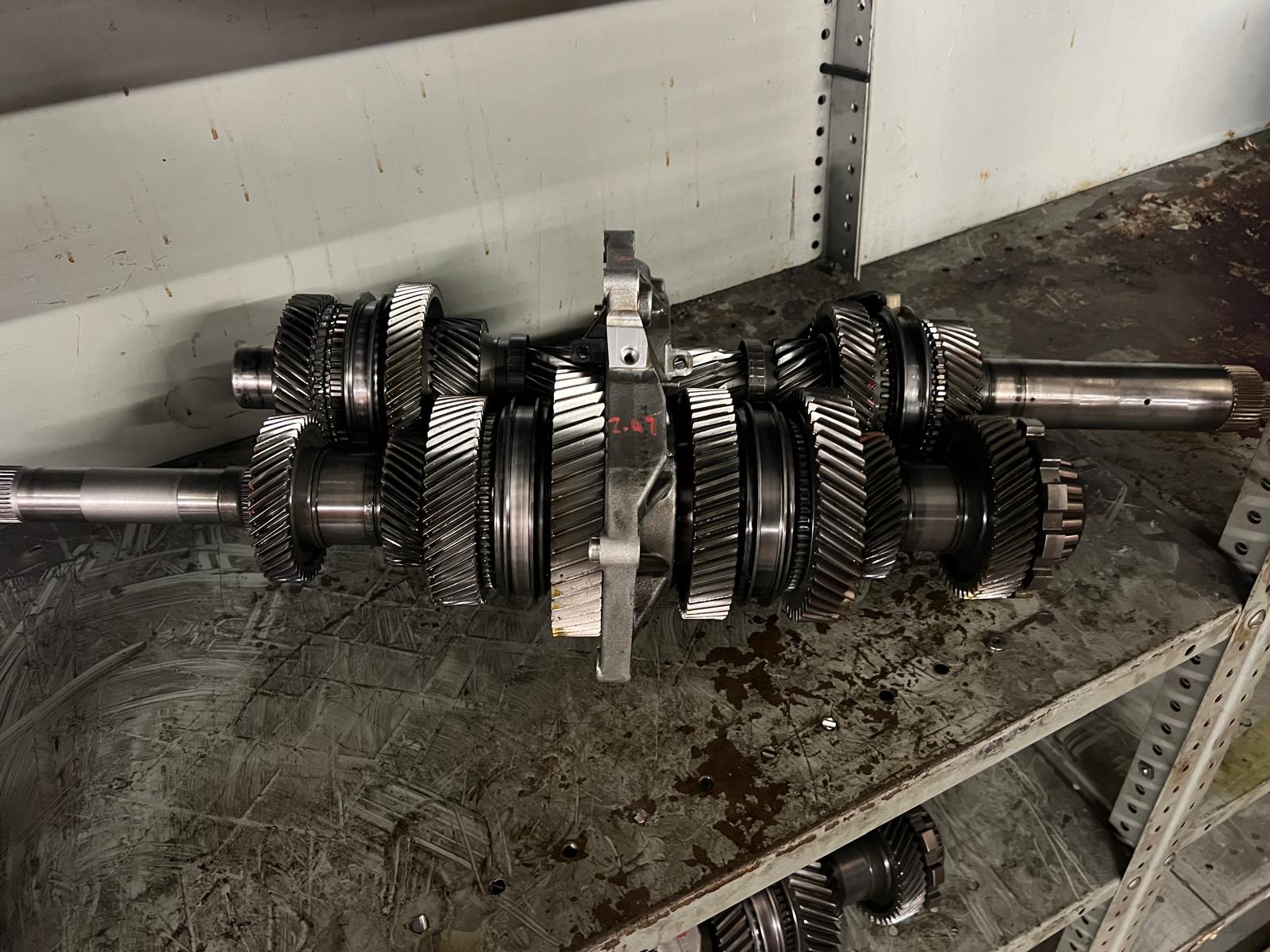
Gearbox juddering at low speed, a shudder or vibration as you pull away or crawl in traffic, comes from one of two places: the torque converter on a conventional automatic, or the clutch packs on a dual clutch gearbox. Which one you have determines both the likely cause and the fix, and in many cases the fluid condition is the deciding factor in whether the judder can be cured with a service or needs mechanical repair.
Torque converter shudder on conventional automatics
Most traditional automatics lock the torque converter with a small internal clutch once you are moving, to remove slip and save fuel. On many modern gearboxes that lock up clutch is applied gently and partially even at low speeds. When the fluid degrades or the clutch lining wears, that partial engagement grabs and releases rapidly instead of slipping smoothly, and you feel it as a shudder, typically at light throttle between roughly 20 and 40 mph, or as a low vibration pulling away.
The good news is that torque converter shudder caught early is one of the few gearbox faults that a fluid change genuinely fixes. The friction behaviour of the fluid is what lets the lock up clutch engage smoothly, and fresh fluid of the correct specification often removes the shudder entirely. Left for years, the shudder wears the clutch lining and contaminates the fluid with debris, and at that point the converter itself needs replacing, which means removing the gearbox.
Clutch judder on dual clutch gearboxes
On DSG, PowerShift, EDC and other dual clutch designs, low speed judder is the signature complaint. These gearboxes creep and pull away by slipping a clutch, exactly as a driver does with a manual, and when that clutch wears unevenly, overheats or its control pressure fluctuates, the take up becomes a shudder. Dry clutch versions, such as the smaller DSG units and the Ford PowerShift, are especially known for it, and our post on Ford PowerShift problems covers one of the best documented examples.
Fixes range from software updates and clutch adaptation resets, which recalibrate how the clutch is applied, through to clutch pack replacement where the friction material is worn or contaminated. A specialist can read the clutch wear and adaptation values electronically before any decision is made, so the state of the clutches is measured rather than guessed.
Ruling out the impostors
Not every low speed shudder is the gearbox. Worn engine mountings transmit vibration on take up. A failing driveshaft joint can shudder under load at low speed. Even a misfiring engine at low revs can feel like transmission judder from the driver’s seat. Part of a proper diagnosis is separating these, usually through a road test, a check of the mountings and driveline, and a scan for both engine and transmission codes. It is a five minute job for a specialist and it prevents an expensive wrong turn.
Why acting early matters
Judder is friction components engaging badly, and every judder event generates heat and wear at the exact surface that is already struggling. Torque converter shudder cured with fluid this month can need a converter next year. Dual clutch judder addressed with adaptation and software now can need clutch packs later. The repair escalates with time in a very predictable way, which is why this is a fault worth diagnosing at the first consistent appearance rather than the point where the car becomes unpleasant to drive.
Frequently asked questions
Why does my automatic judder when pulling away?
On a conventional automatic it is usually torque converter lock up shudder linked to fluid condition. On a dual clutch gearbox it is typically clutch wear or a control pressure fault. Worn mountings and driveshafts can mimic both.
Can a fluid change fix torque converter shudder?
Often yes, if it is caught early. The correct fresh fluid restores smooth lock up clutch engagement. Long standing shudder that has worn the clutch lining needs a converter replacement.
Is DSG judder normal?
A slight take up characteristic is normal on dual clutch gearboxes, but a pronounced or worsening shudder is not. Clutch wear values can be read electronically to confirm the cause.
Does gearbox judder get worse?
Yes. Judder wears the friction surface causing it, so it worsens progressively and the repair grows with it. Early diagnosis regularly means a service level fix rather than a mechanical one.
If your car judders at low speed, find out which side of the gearbox it is coming from before spending anything. Call Service4Service on 0808 164 0418 or send an enquiry for honest advice and a fixed price quote with a 12 month guarantee.
 Ellis
Ellis