

WHAT'S THE DIFFERENCE BETWEEN A SERVICE AND AN MOT?
What’s the Difference Between a Service and an MOT?
Two Very Different Purposes
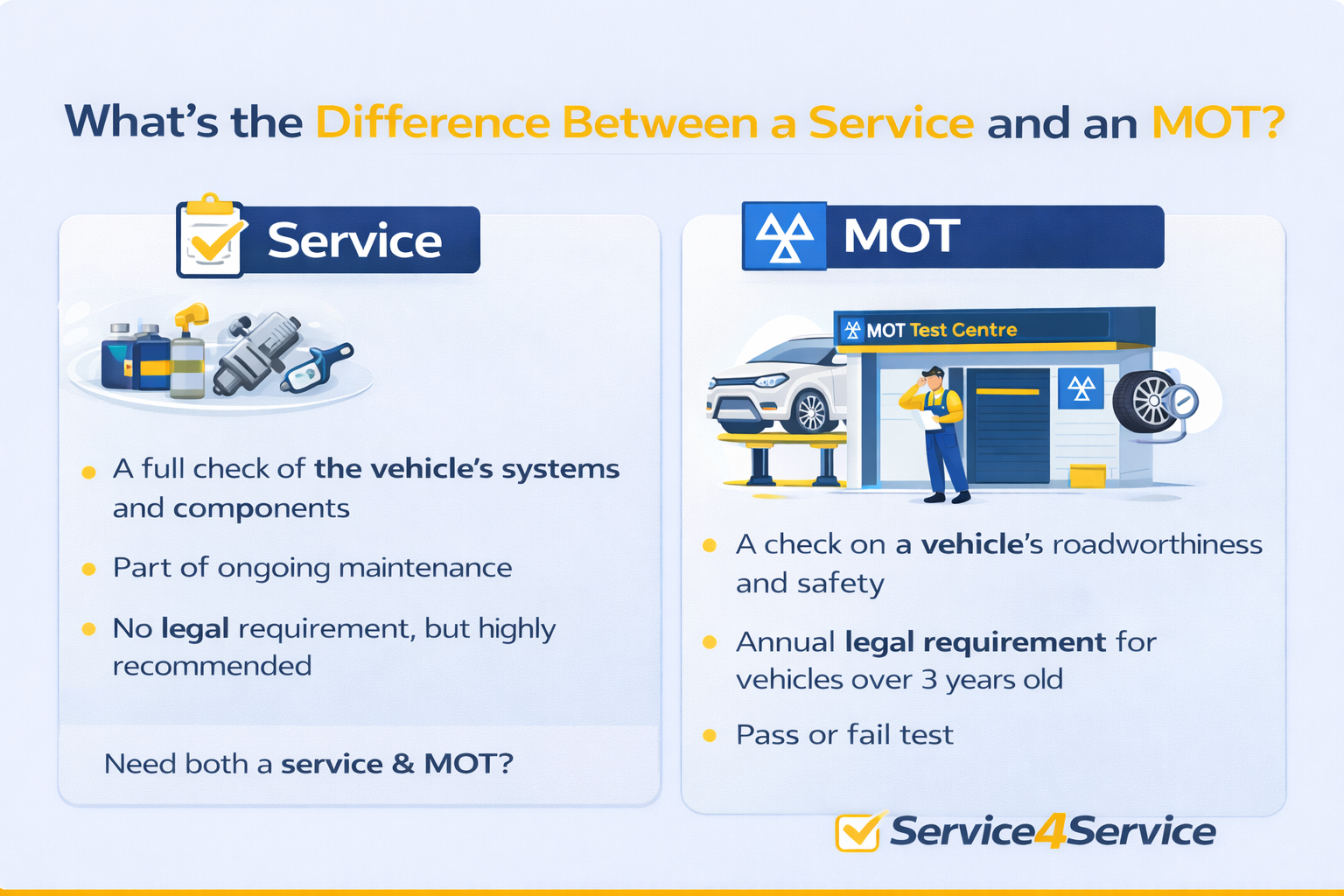
Although often mentioned together, an MOT and a vehicle service serve entirely different roles in maintaining your car. An MOT (Ministry of Transport test) is a legal requirement in the UK for vehicles over three years old. Its primary purpose is to ensure that your car meets the minimum safety and environmental standards set by law. During an MOT, key components such as brakes, tyres, lights, suspension, and emissions are checked to confirm they are functioning correctly at that moment in time.
A service, on the other hand, is not a legal obligation but a highly recommended form of preventative maintenance. It focuses on the overall health and performance of your vehicle rather than just compliance. During a service, mechanics inspect, replace, and maintain parts that naturally wear over time, such as engine oil, filters, spark plugs, and fluids. This helps prevent future breakdowns and keeps your vehicle running efficiently.
In simple terms, an MOT is a snapshot of your car’s safety on a given day, while a service is a proactive approach to preserving its long-term reliability. One ensures you’re legally allowed to drive; the other ensures your car continues to perform at its best.
____________________________________________________________________________________
Why You Need Both
Relying on just an MOT is not enough to keep your vehicle in good condition. While it confirms that your car meets minimum safety standards, it doesn’t account for gradual wear and tear that could lead to problems down the line. For example, an MOT might not flag slightly degraded oil or a filter nearing the end of its life, but these issues can eventually impact engine performance or cause costly damage if ignored.
Regular servicing complements the MOT by addressing these underlying issues before they escalate. It helps identify early warning signs, such as minor leaks, worn belts, or reduced brake efficiency, that may not yet be severe enough to fail an MOT but could soon become serious concerns.
By combining both, you’re not only staying compliant with the law but also protecting your investment. A well-maintained vehicle is safer, more reliable, and often more fuel-efficient. Additionally, keeping up with both MOTs and servicing reduces the risk of unexpected breakdowns and expensive repairs, giving you greater confidence every time you get behind the wheel.
____________________________________________________________________________________
What Does Each Include?
Understanding exactly what’s covered in an MOT versus a service can help drivers better appreciate their value. While both involve inspections, the depth and purpose of those checks differ significantly.
- MOT checks include: lights, brakes, tyres, suspension, seatbelts, windscreen visibility, and emissions compliance
- Service checks include: oil and filter changes, fluid top-ups, engine diagnostics, brake wear, battery health, and general mechanical condition
- MOT focuses on: meeting minimum legal safety standards at the time of testing
- Service focuses on: maintaining performance, preventing wear, and extending the life of your vehicle
By understanding these differences, it becomes clear why one cannot replace the other—both play a vital role in responsible vehicle ownership.
____________________________________________________________________________________
When Should You Book Them?
Knowing when to schedule your MOT and service can help you stay organised and avoid last-minute stress. Planning ahead ensures your car remains both compliant and in top condition throughout the year.
- MOT: required annually once your vehicle is over three years old
- Interim service: typically every 6 months or around 6,000 miles
- Full service: usually every 12 months or 12,000 miles
- Major service: recommended every 24 months for a more comprehensive check
Many drivers choose to align their service schedule with their MOT date, creating a simple, easy-to-remember routine that keeps everything on track.
____________________________________________________________________________________
Should You Book a Service and MOT Together? – The Smart Option
Booking your service and MOT at the same time is often the most practical and efficient approach. Many garages offer combined packages, allowing technicians to carry out both checks in a single visit. This not only saves time but also creates an opportunity to address potential issues before the MOT test is completed.
For instance, during a service, a mechanic might notice worn brake pads, low fluid levels, or tyres approaching the legal limit. These can be corrected immediately, significantly increasing your chances of passing the MOT without any advisories or failures. This proactive approach can save you the inconvenience of a failed test and the need for a retest.
From a financial perspective, combining the two can also be more cost-effective. Many service centres provide discounted rates when both are booked together, and resolving minor issues early can prevent more expensive repairs later.
____________________________________________________________________________________
Added Benefits
There are several additional advantages to combining your MOT and service appointments. One of the most significant is efficiency, reducing the number of trips you need to make to the garage. For busy drivers, this can make a big difference in managing time and avoiding disruption to daily routines.
Another key benefit is the thoroughness of the inspection. When both a service and MOT are carried out together, your vehicle undergoes a more comprehensive evaluation. This ensures that not only is it legally compliant, but also mechanically sound and performing optimally.
Maintaining a complete and consistent service history is another major advantage. A well-documented record of both servicing and MOTs can increase your vehicle’s resale value and make it more attractive to potential buyers. It also provides useful evidence for warranty claims or insurance purposes, demonstrating that the car has been properly maintained.
____________________________________________________________________________________
Convenience Wins
Ultimately, combining your MOT and service offers convenience, peace of mind, and better overall vehicle care. Instead of juggling separate appointments and worrying about whether your car will pass its MOT, you can handle everything in one go.
This approach simplifies vehicle ownership. You’ll have a clear record of maintenance, fewer reminders to manage, and greater confidence that your car is both safe and reliable. For many drivers, this streamlined process reduces stress and ensures that nothing important is overlooked.
By taking a proactive approach and booking both together, you’re not just meeting legal requirements, you’re investing in the long-term performance, safety, and value of your vehicle.
____________________________________________________________________________________
Final Thoughts
Taking care of your vehicle isn’t just about meeting legal requirements—it’s about ensuring safety, reliability, and long-term value. By combining regular servicing with your annual MOT, you create a complete approach to vehicle maintenance that keeps you protected, prepared, and confident every time you’re on the road.