

WHAT HAPPENS IF YOUR CAR FAILS ITS MOT?
What happens if your car fails its MOT? (31/03/26)
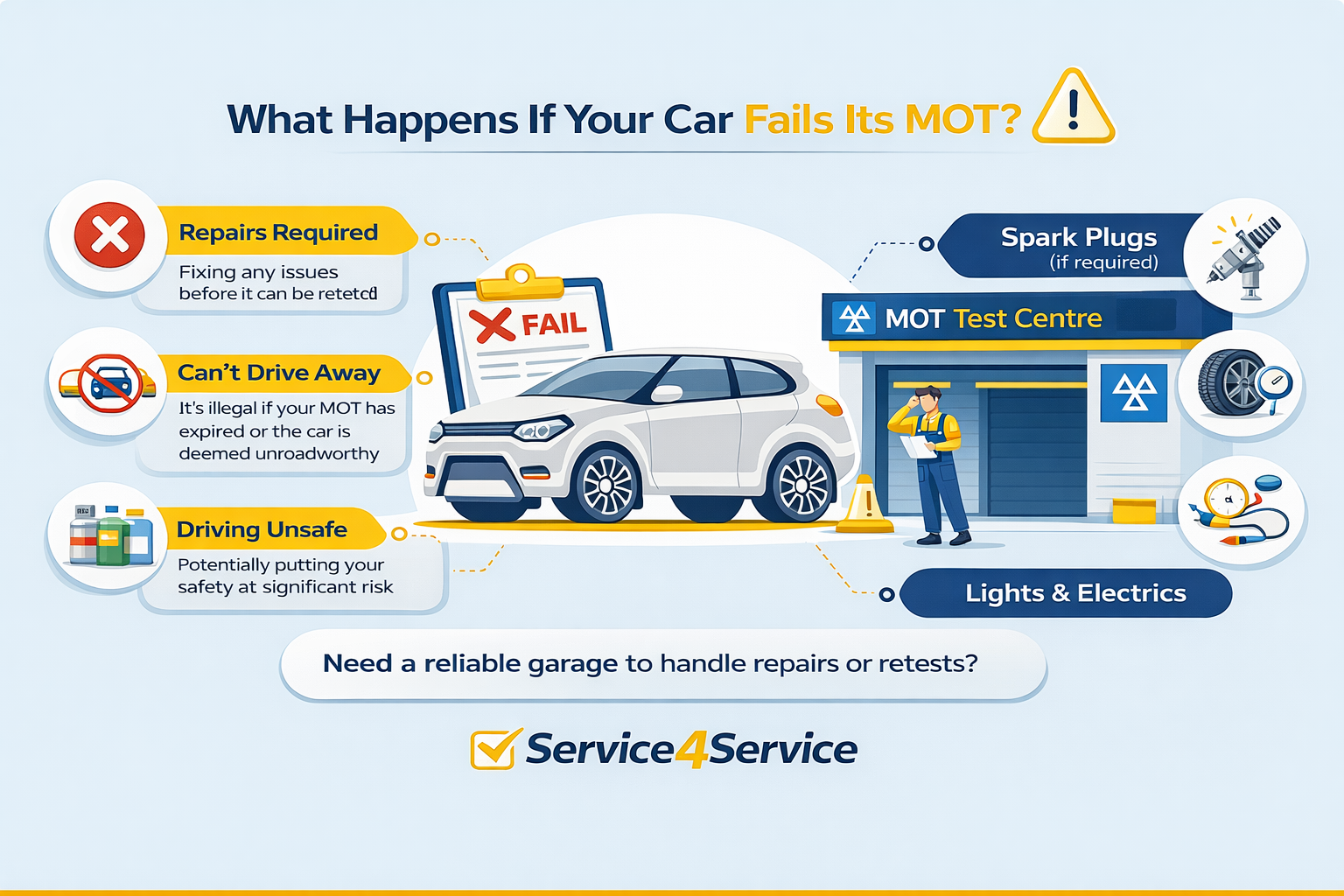
What Happens If Your Car Fails Its MOT? A Complete Guide for UK Drivers
Failing an MOT can feel stressful, especially if you rely on your car every day. However, understanding what the result means, and what to do next, can make the situation far more manageable.
In this guide, we’ll explain what happens when your car fails its MOT, whether you can still drive it, and how to get back on the road quickly and legally.
____________________________________________________________________________________
Understanding Your MOT Result
When your vehicle fails its MOT, you’ll receive a detailed report outlining the issues found during the test. These faults are divided into three categories:
Minor Faults
Minor faults are issues that don’t immediately affect the safety or roadworthiness of your vehicle. Your car can still pass the MOT with these advisories, but they should not be ignored.
Examples include:
- Slight tyre wear
- Minor oil leaks
- Worn wiper blades
While not urgent, addressing minor faults early can prevent them from becoming more serious (and expensive) problems later.
Major Faults
Major faults mean your vehicle has failed the MOT. These issues affect safety or environmental standards and must be repaired before the car can pass.
Examples include:
- Worn brake pads
- Faulty lights
- Suspension issues
Your car may still be driveable in some cases, but only if it remains roadworthy.
Dangerous Faults
Dangerous faults are the most serious category. They indicate an immediate risk to safety or the environment.
Examples include:
- Severely worn brakes
- Unsafe tyres
- Steering faults
If your car has a dangerous fault, it is illegal to drive it until repairs are made.
____________________________________________________________________________________
Can You Drive If Your Car Fails Its MOT?
This is one of the most common questions, and the answer depends on the type of fault.
If There Are Dangerous Faults
You cannot legally drive the vehicle. Doing so can result in:
- Fines of up to £2,500
- Points on your driving licence
- Invalidation of your insurance
- Increased risk of accidents
In most cases, the safest option is to arrange recovery or have repairs carried out at the test centre.
If There Are Major Faults
You may be able to drive the car only if it is still roadworthy and your previous MOT certificate is still valid. However, this can be a grey area, if the fault affects safety, you should avoid driving until it’s fixed.
If Only Minor Faults Are Found
Your car will pass the MOT, and you can continue driving. However, these issues should be monitored and repaired in due course.
Getting Your Car Back on the Road
Once your vehicle has failed, the next step is to carry out the necessary repairs.
Step 1: Review the Failure Report
Carefully go through the MOT certificate to understand what needs fixing. This helps you prioritise urgent repairs.
Step 2: Arrange Repairs
You can choose to:
- Have the repairs completed at the MOT test centre
- Take your vehicle to another garage
Step 3: Book a Retest
After repairs are completed, your car will need a retest.
If repairs are done within 10 working days at the same garage, you may qualify for a free or reduced-cost retest
The retest will focus on the failed items
Step 4: Pass and Drive
Once your car passes, you’ll receive a valid MOT certificate and can legally drive again.
Keeping records of repairs and retests is also useful for resale value and future maintenance.
____________________________________________________________________________________
What Happens If You Drive Without an MOT?
The Legal Reality
In the UK, driving without a valid MOT is illegal, except in one situation:
You are driving to or from a pre-booked MOT test
Outside of this exception, you could face:
- A fine of up to £1,000
- Points on your licence
- Your vehicle being flagged or even seized
The Insurance Risk
Driving without an MOT can invalidate your insurance. This means:
- You may not be covered in an accident
- You could be personally liable for damages
Safety Concerns
An MOT ensures your car meets minimum safety standards. Without it, there’s no guarantee that:
- Your brakes are working properly
- Your tyres are safe
- Your steering is reliable
This increases the risk of breakdowns and accidents.
____________________________________________________________________________________
How to Avoid MOT Failures
While not all failures are avoidable, regular maintenance can significantly reduce the risk.
Simple Checks You Can Do:
- Check tyre tread depth and pressure
- Ensure all lights are working
- Top up fluids (oil, coolant, washer fluid)
- Replace worn wiper blades
- Listen for unusual noises
Stay Organised
- Set reminders for your MOT expiry date
- Book your test early (you can renew up to one month before expiry)
- Combine MOTs with regular servicing
____________________________________________________________________________________
Final Thoughts
Failing an MOT isn’t the end of the road, it’s an opportunity to fix issues and ensure your car is safe to drive.
By understanding the different fault categories, knowing when you can drive, and acting quickly on repairs, you can minimise disruption and get back on the road with confidence.
Staying proactive with maintenance and MOT scheduling will not only keep you legally compliant but also help you avoid unexpected costs and keep your vehicle performing at its best.