

HOW TO KEEP YOUR CAR RUNNING LONGER: A PRACTICAL GUIDE TO PREVENTING REPAIRS
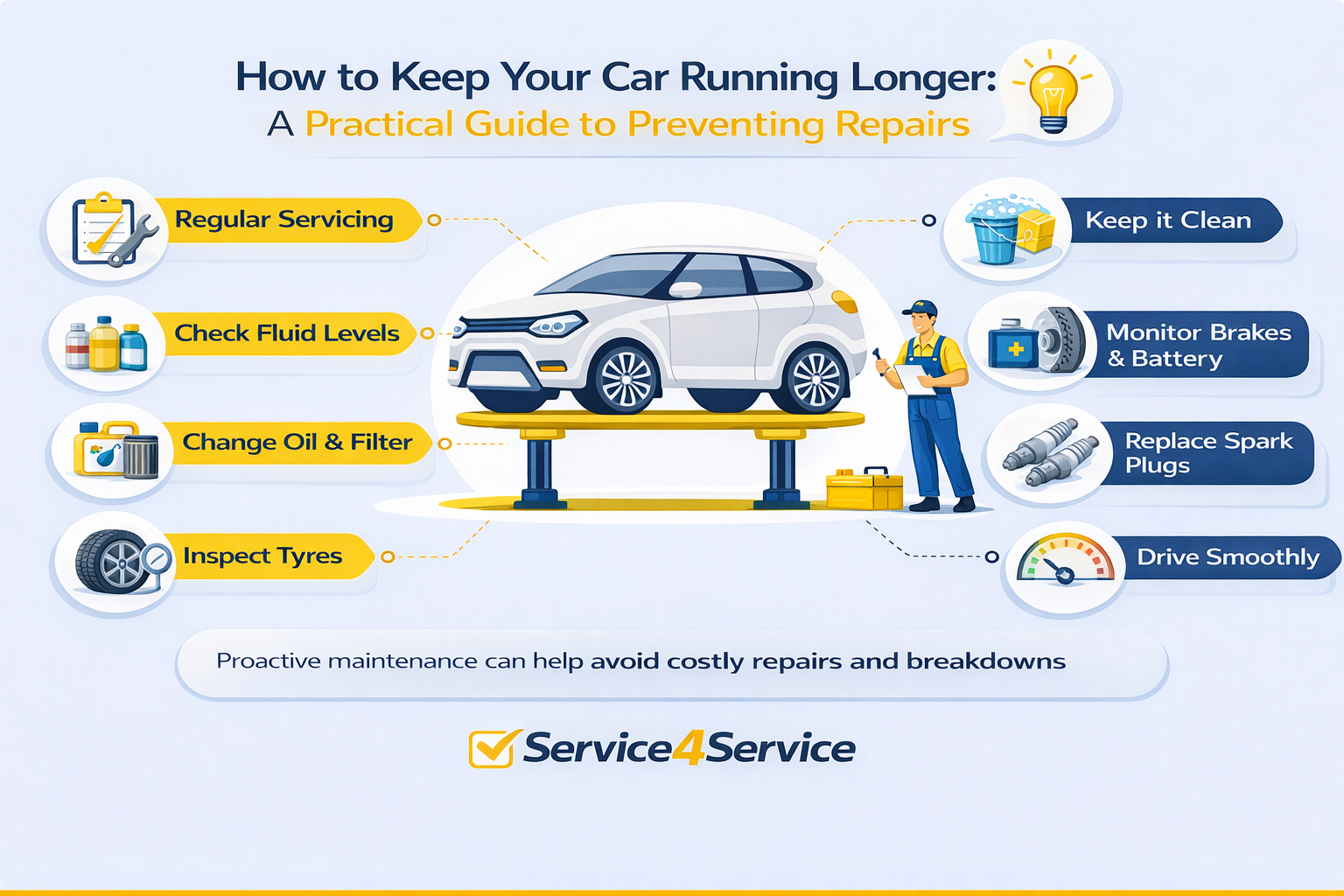
How to Keep Your Car Running Longer: A Practical Guide to Preventing Repairs
Owning a car is convenient, but repairs and servicing can quickly become expensive if you’re not proactive. The good news is that with consistent care and smart habits, you can significantly extend your car’s lifespan and reduce the frequency of repairs. This guide breaks down simple, effective ways to keep your vehicle in top shape for as long as possible.
________________________________________
Stay Consistent with Basic Maintenance
Routine maintenance is the foundation of a healthy car. Skipping small services often leads to bigger, more expensive problems down the line.
- Change your oil regularly: Engine oil lubricates moving parts and prevents overheating. Old oil becomes dirty and less effective.
- Check and replace filters: Air filters and oil filters keep contaminants out of your engine.
- Inspect fluid levels: Brake fluid, coolant, transmission fluid, and power steering fluid all play critical roles.
Tip: Follow your manufacturer’s recommended service schedule - it’s designed specifically for your car.
________________________________________
Drive Smoothly, Not Aggressively
Your driving style has a direct impact on wear and tear.
- Avoid rapid acceleration and harsh braking
- Don’t overload your vehicle unnecessarily
- Slow down over speed bumps and rough roads
Smooth driving reduces strain on the engine, brakes, suspension, and transmission - saving you money over time.
________________________________________
Keep Your Tyres in Good Condition
Tyres are often overlooked, but they affect safety, fuel efficiency, and overall performance.
- Check tyre pressure at least once a month
- Rotate tyres every 5,000–8,000 miles
- Ensure proper wheel alignment
Underinflated or misaligned tyres wear out faster and force your engine to work harder.
________________________________________
Don’t Ignore Warning Signs
Cars usually give early warning signs before something goes seriously wrong.
- Strange noises (grinding, knocking, squealing)
- Dashboard warning lights
- Reduced performance or fuel efficiency
Addressing these issues early can prevent minor problems from becoming major repairs.
________________________________________
Keep Your Car Clean - Inside and Out
It’s not just about appearance - cleanliness protects your vehicle.
- Wash your car regularly to remove dirt, salt, and grime
- Wax occasionally to protect the paint
- Clean the interior to prevent wear and unpleasant odours
Road salt and dirt can cause rust and corrosion, especially in colder climates.
________________________________________
Warm Up Your Engine (But Don’t Overdo It)
Modern engines don’t need long warm-ups, but giving your car a minute before driving - especially in cold weather - helps oil circulate properly. Avoid revving the engine immediately after starting; this can cause unnecessary strain.
________________________________________
Use Quality Parts and Fuel
Cutting corners on parts and fuel can cost more in the long run.
- Use high-quality engine oil and replacement parts
- Choose the correct fuel type recommended for your car
- Avoid consistently running your tank near empty
Cheap or incorrect components can lead to reduced efficiency and premature damage.
________________________________________
Keep an Eye on Your Battery
A failing battery can leave you stranded and affect other systems.
- Check battery terminals for corrosion
- Replace the battery every 3–5 years (or as needed)
- Turn off lights and electronics when the engine isn’t running
________________________________________
Protect Your Car from Extreme Conditions
Weather and environment matter more than most people think.
- Park in shaded or covered areas when possible
- Use a windshield sunshade in hot weather
- In winter, clear ice properly - don’t pour hot water on glass
Extreme temperatures can impact your battery, fluids, and overall vehicle condition.
________________________________________
Build a Relationship with a Trusted Mechanic
A reliable mechanic can spot potential issues early and provide honest advice.
Regular check-ups - even when nothing seems wrong - can save you from costly surprises later.
________________________________________
Final Thoughts
Taking care of your car doesn’t require expert-level knowledge - just consistency and awareness. By adopting good habits, paying attention to early warning signs, and staying on top of routine maintenance, you can significantly reduce the need for repairs and keep your car running smoothly for years.
In the end, a little effort today can save you a lot of money and stress tomorrow.