
Automatic gearbox specialists
Having an issue with your automatic gearbox?
Slip, delayed Drive, harsh shifts or limp mode. Automatic faults do not settle on their own.
- Revs rise but the car does not pick up speed?
- A bang into Drive, or a warning light on the dash?
- Want a specialist diagnosis before anyone quotes a new unit?
An automatic gearbox changes gear for you. There is no clutch pedal. When it slips, slams or goes into limp mode, that is specialist work. That is core work at Service4Service.
Do not keep driving a slipping automatic. Heat inside the unit only makes the next repair bigger.
8am - 5.30pm Mon-Fri


What is an automatic gearbox?
An automatic gearbox selects ratios without a clutch pedal. A conventional unit uses a torque converter and a planetary gear set to send power to the wheels. A dual-clutch gearbox still uses clutches, but the gearbox operates them.
A CVT uses a belt or chain and pulleys instead of fixed gears. Different hardware, same job: keep the engine in the right range while you drive.
When any of these fail, guessing the part wastes time. Diagnosis comes first, then a repair that matches what the unit actually needs.
An automatic fault does not go away on its own
Slip, flare, a burning smell or limp mode will not bed in. Heat and metal in the oil spread the damage. Leave it and you can be left with no Drive, or looking at a bigger job than the fault you started with.
Automatic gearbox symptoms people search
If any of these sound like your car, do not wait for it to fail on the road.
Delayed Drive or Reverse
A pause, thump or flare into gear. Internal clutches, oil pressure or the valve body can be at fault.
Slipping
Engine revs rise, road speed does not. Heat follows. Keep driving and the damage spreads.
Harsh or jerky shifts
A bang on take-off or between gears. Not a character trait. It is a fault, and it usually gets worse.
Limp mode
The gearbox has protected itself. You may still crawl. You should not treat that as a finished journey.
Whine, rumble or a burnt smell
Noise and smell are the unit telling you the oil or the internals are past their best.
Warning light
A transmission lamp is not a suggestion. Get the codes read before you book parts.
How an automatic gearbox works
Oil under pressure, a valve body, and solenoid valves decide which clutch pack or band is applied. The transmission control unit times that against speed and throttle.
On a dual-clutch the mechatronic unit does a similar job with two clutches and no pedal.
Hydraulic pressure
The pump feeds oil. No pressure, no Drive.
The valve body chooses
Passages open so the right clutch pack takes up.
Wear shows as slip
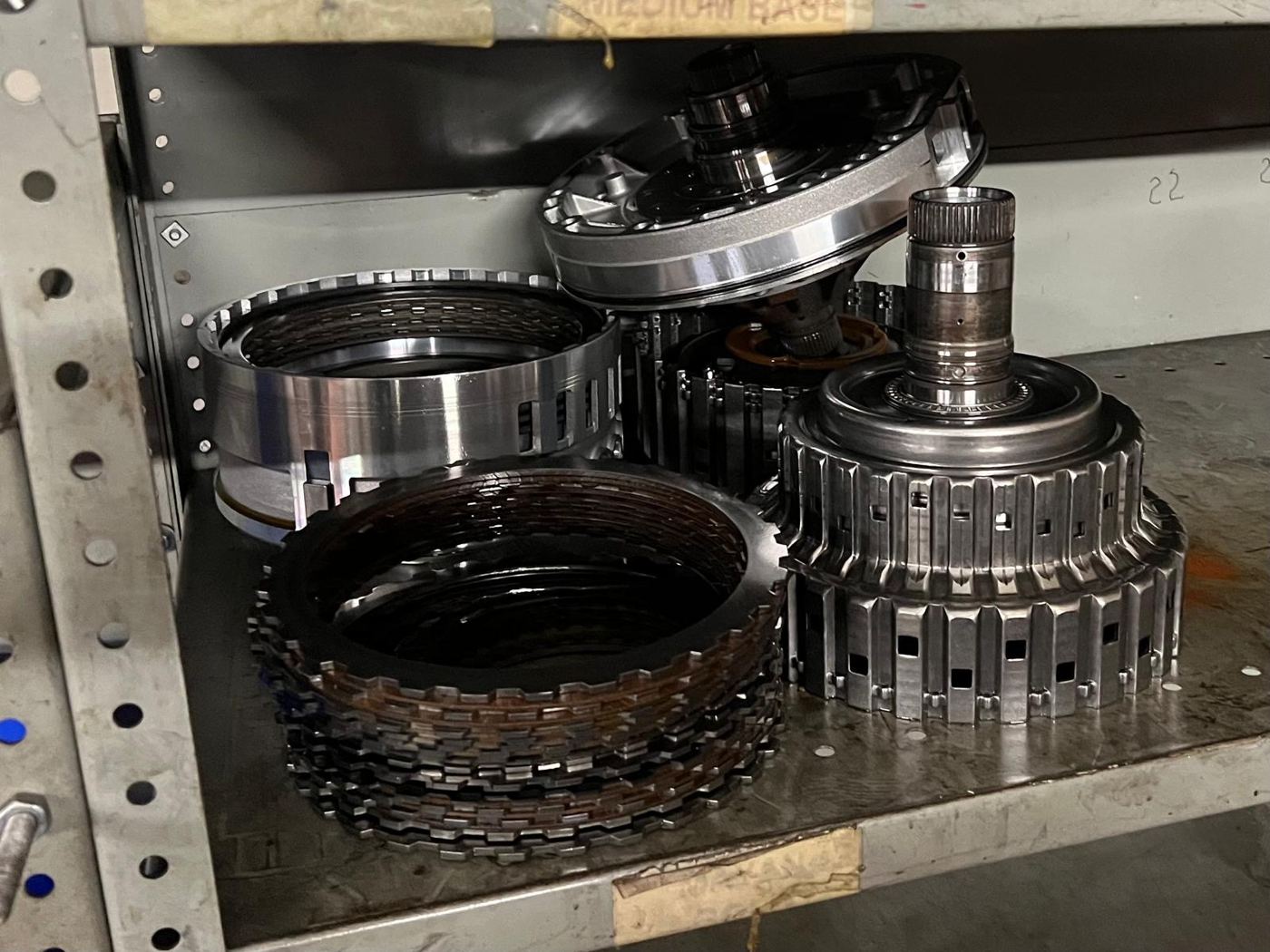
Friction material thins. Flare, delay and heat follow. It only gets worse.
The automatic work we do every day
If it is an automatic, dual-clutch or CVT fault, that is our job. We diagnose first, then repair, adapt or rebuild only if that is what the unit needs.
- Conventional automatics, including ZF and Aisin
- DSG, Powershift, PDK, S tronic and other dual-clutch units
- CVT diagnosis and repair where the unit can be saved
- Clutch packs, valve bodies, mechatronics and torque converters
- Collection when limp mode or slip makes driving unwise
Still driving a slipping automatic?
Every extra mile adds heat. If the unit will not take up cleanly, that is automatic gearbox repair. Call before it leaves you with no Drive.
Why this work comes to Service4Service
- Automatic and dual-clutch work is core work, not a sideline
- Diagnosis before parts
- Collection when the car should not be driven
- 12 months or 12,000 miles on parts and labour
Guarantee and payment
Repairs are backed by a 12 month or 12,000 mile warranty on parts and labour. See Payment Options for ways to pay.
A traditional automatic has no clutch pedal. It uses a torque converter and internal clutch packs. A dual-clutch still uses clutches, but the gearbox operates them. Slip or limp mode on either is gearbox territory.
A delay into Drive or Reverse is often worn clutch packs, low or burnt fluid, or a valve body fault. It will not fix itself. A diagnostic is the honest first step.
Many faults are a clutch pack, valve body, mechatronic or torque converter job, not a whole new unit. We diagnose first and only rebuild or replace if that is what it needs.
The control unit has seen a fault it will not ignore. Speed sensors, solenoids, overheating or internal slip can all trigger it. Keep using the car and you can make a repairable fault worse.
Engine faults tend to show as misfire, smoke or a loss of power in every gear. Gearbox faults tend to show as slip, harsh shifts, delay into Drive or a transmission warning light. If you are not sure, we will tell you.
No. Service4Service does not repair manual gearboxes. Automatic, dual-clutch and CVT work is what we do.
Related guides
What is a torque converter automatic?
How a conventional automatic uses a converter and clutch packs.
What is a dual-clutch gearbox?
Two clutches, no pedal, and why judder is gearbox work.
Do not wait for the automatic to give up
If it is slipping, slamming or stuck in limp mode, tell us the symptoms. Automatic gearbox work is what we handle end to end.

