
Automatic gearbox specialists
Having an issue with your torque converter?
Shudder at speed, slip on take-off or overheating. Converter faults do not settle on their own.
- A shake at 40 to 50mph that feels like a warped disc?
- Revs rise in Drive with little road speed?
- Want a specialist before anyone quotes a whole gearbox?
A torque converter links the engine to a conventional automatic. When it shudders, slips or overheats, that is gearbox work. Converter diagnosis and repair is core work at Service4Service.
A lock-up shudder will not bed in. Keep driving and you can overheat the oil and the rest of the unit.
8am - 5.30pm Mon-Fri


What is a torque converter?
A torque converter sits between the engine and a conventional automatic gearbox. It uses fluid to pass drive, so the engine can idle in Drive. There is no clutch pedal.
Inside it is a lock-up clutch that bolts the converter solid at cruise. When that clutch chatters you feel a shudder. When the converter itself is worn you get slip, stall issues or heat.
It bolts to a flexplate. A dual-clutch does not use a torque converter. Mixing those up is how people get the wrong quote.
Converter shudder does not go away
A shake at cruise, slip on take-off or a converter that will not stall correctly will not polish out. Heat in the oil travels through the gearbox. Leave it and a converter job can become a much bigger repair.
Torque converter symptoms people search
If any of these sound like your car, do not wait for it to fail on the road.
Shudder at speed
A vibration in Drive at cruise that eases in Neutral. Classic lock-up clutch chatter.
Slip on take-off
Revs rise, the car lags. The converter is not multiplying torque as it should.
Overheating
A hot gearbox, a smell, then limp. Converters dump heat into the oil.
Stall too high or too low
The engine screams or stalls when you brake in Drive. Converter internals can be worn.
Whine in Drive
Pump or converter noise. It usually gets louder.
No Drive, engine fine
The converter or the unit behind it has given up. Diagnosis first.
How a torque converter works
Fluid thrown by the impeller drives the turbine. That is why idle in Drive is possible. At speed the lock-up clutch closes so you are not wasting fuel in slip.
The transmission cooler has to dump that heat. A blocked cooler cooks converters.
Fluid couples the engine
The car can idle in Drive.
Lock-up closes at cruise
Solid drive, less heat.
Wear shows as shudder or slip
The clutch chatters or the fluid coupling is tired. It only gets worse.
Converter work we do
We diagnose lock-up shudder, slip and overheating, then repair or replace the converter when that is the fault, not a whole gearbox by default.
- Lock-up shudder diagnosis
- Converter replacement with the gearbox repair
- Cooler and fluid-related heat faults
- Collection when it should not be driven
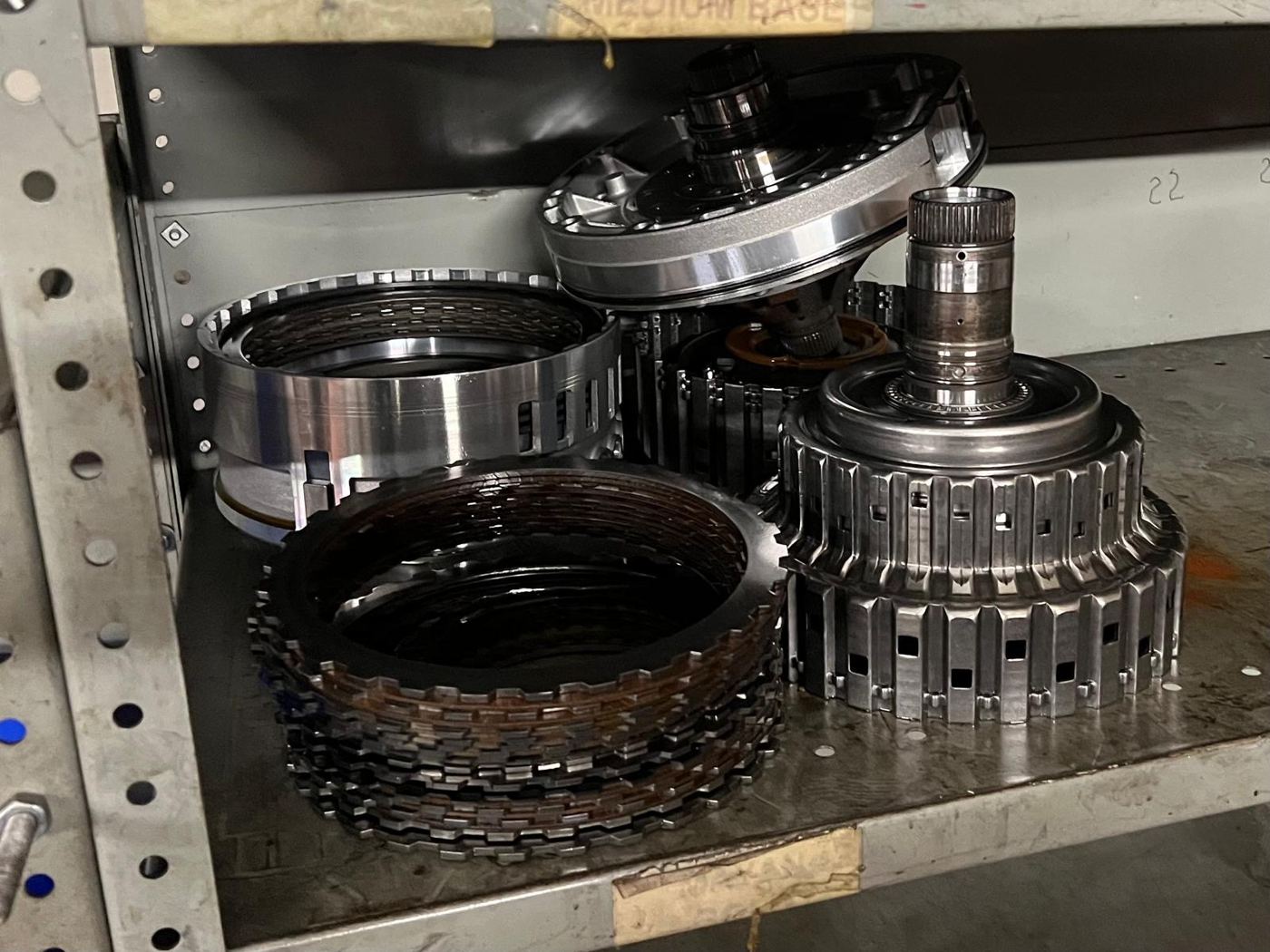
Still driving a shuddering converter?
Lock-up chatter is a worn clutch inside the converter. That is automatic gearbox repair. Call before the heat takes the rest of the unit.
Why this work comes to Service4Service
- Automatic and dual-clutch work is core work, not a sideline
- Diagnosis before parts
- Collection when the car should not be driven
- 12 months or 12,000 miles on parts and labour
Guarantee and payment
Repairs are backed by a 12 month or 12,000 mile warranty on parts and labour. See Payment Options for ways to pay.
No. A DCT uses two clutches. A conventional automatic uses a torque converter.
A vibration at cruise in Drive that often eases if you lift off or shift to Neutral. It is not a wheel balance.
The usual route is replacement as part of the gearbox job, once diagnosis confirms it. We do not guess.
Lock-up is a clutch inside the converter. The converter can also fail as a fluid coupling. Different feel, same neighbourhood.
Sometimes a fluid change eases a mild lock-up chatter. Often the clutch is already worn. Diagnosis tells you which.
No. Torque converters sit on automatics. That is the work we do.
Related guides
What is torque converter lock-up?
The clutch inside the converter that chatters at cruise.
What is a transmission cooler?
Why heat from the converter has to go somewhere.
Do not ignore converter shudder
If it shakes at cruise, slips on take-off or runs hot, tell us the symptoms. Torque converter work is part of the automatic repairs we do.

